



Gardening, General Plant Care Guides, Lifestyle, Plants and Wellness, Plantside Chats: Life Lessons Learned in the Garden
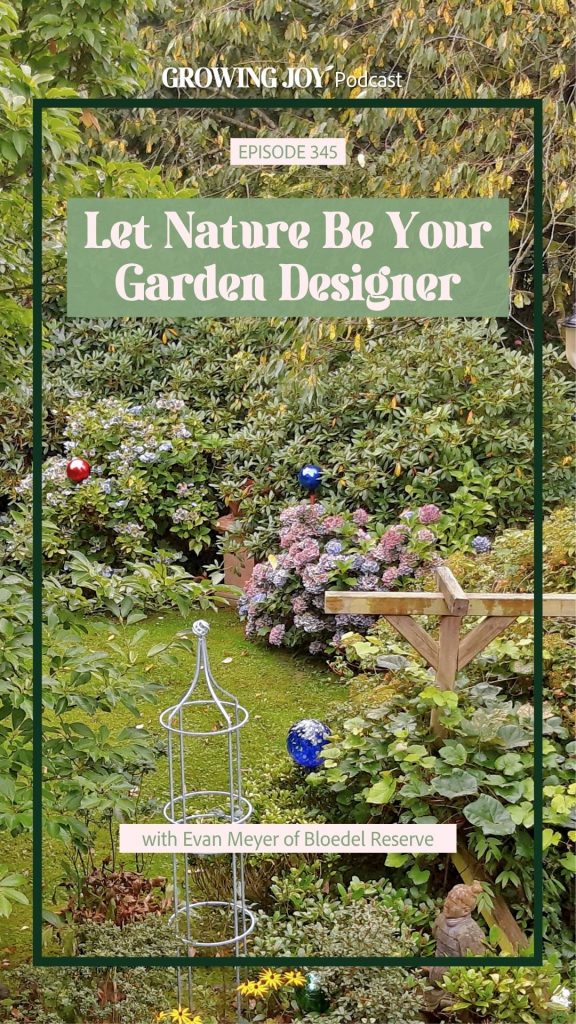
Let Nature Be Your Garden Designer with Evan Meyer of Bloedel Reserve, Ep 345
Don't forget to subscribe to the podcast,
What if we don't design or control our gardens, but instead collaborate with them? I moved from the lush woods of Zone 5B to a front yard full of sand in Zone 10B Florida and felt like I had no control over my garden design. It was frustrating! So I sat down with Evan Meyer of Bloedel Reserve, a 140-acre garden and wild lands complex on Bainbridge Island just outside of Seattle, to help me feel more grounded in my new garden. Evan has spent his career working across the states studying restoration ecology, native plants, and conservation horticulture. We talked about co-designing with nature, as he believes we should move away from the “God complex” of traditional garden design and let Mother Nature be our co-designer. Listen in!
In this episode, we learn:
- [01:57] Meet Evan Meyer, Executive Director of Bloedel Reserve!
- [05:15] What Evan learned about ecological horticulture across different climates
- [10:15] Why individual home gardens have a larger ecological footprint than public parks
- [12:19] How the plant supply chain keeps most landscapes generic
- [15:43] Experience single-origin honey with 3x more antioxidants with Manukora!
- [17:28] Prep your kitchen for garden harvest season with Caraway Cookware!
- [18:53] Why are more gardeners actively seeking out native plants?
- [21:45] How to co-design your home garden with nature
- [22:06] If a tree falls, leave it!
- [24:42] Why you should read your local ecology
- [25:46] Let’s reframe garden “problems” as opportunities
- [29:10] More examples from Bloedel that home gardeners can actually steal
- [30:06] How does Bloedel's moss gardener curate rather than plant?
- [31:44] Retrain your eyes to find dormant plants and deadwood beautiful!
- [34:35] Practical steps for learning your local wild ecology
- [37:58] How an ecologically minded front yard builds neighborhood community
- [39:07] The rise of whimsy in garden design and why we're craving that feeling right now
- [40:13] What to expect when you visit Bloedel Reserve!
Order my book!
Growing Joy: The Plant Lover's Guide to Cultivating Happiness (and Plants) by Maria Failla, Illustrated by Samantha Leung
What Is ‘Co-Designing with Nature’?
It’s the idea that your local ecosystem already has design intelligence built into it, so your job is to work alongside it (not override it).
The principles are simple. You observe what’s already happening in your local spaces, notice which plants want to grow there, and then you let that inform you in what you do in your garden.
Making Native Plants Popular Again
Evan mentioned that one of the biggest challenges we face in native plant gardening is the nursery supply chain.
Since big box stores usually sell the same plants everywhere, regardless of whether they actually belong there, this creates a kind of bottleneck where it’s hard for gardeners to find the right plants for their specific area.
So this creates the need for us to search for the right plants. But you don’t need to look far because you can just support your local mom-and-pop nurseries! They know your region, and they'll steer you toward what will actually grow in your area.
If a Tree Falls… Leave It (Or Use It)
Fallen trees aren't a problem to solve at Bloedel Reserve. In the Pacific Northwest, these logs get covered in moss and ferns so fast, becoming what ecologists call nurse logs! And whole ecosystems grow on top of them.
Here's how Evan suggests putting fallen wood to work:
- Path edging instead of buying plastic or concrete pavers
- Hügelkultur berms: stack the wood, cover with soil, and now you have something new to plant in
- Raised bed walls using logs as the border
- Nurse logs: leave it in a quiet corner and let moss, ferns, and mushrooms move in
Snags (dead trees still standing) are worth keeping too, when safe. They shelter insects, woodpeckers, and nesting birds.
Note: Even one small pile of deadwood tucked in a corner helps ground-dwelling insects more than you'd think.
Let Nature Plant for You
Evan shared that Darren Strange, the gardener behind the moss garden at Bloedel Reserve, barely plants anything himself. He lets nature drop seedlings where it wants… and then decides which ones stay.
Evan calls this being a garden editor rather than a garden designer. You're responding to what's already showing up.
Here's how to try it at home:
-
- Pause before pulling volunteers: give that unknown seedling a week and see what it becomes.
- Watch before you plant: spend a season observing what naturally wants to grow in a spot.
- Curate, don't control.
How to Retrain Your Eye for Wild Beauty
A lot of what we've been taught to call “ugly” in the garden is actually exactly what the ecosystem needs.
Seasonal dormancy isn't a dead garden. It's a resting one. Native plants go brown in summer the same way trees go bare in winter. It's just the season.
And that “mess” is doing something:
- Leaf litter gives insects a place to hide and survive winter
- Deadwood feeds mushrooms and bugs
- Dormant plants are resting, not dying
The best place to start is simple: go outside. Visit a local nature preserve or even a weedy roadside. Let that be your reference point!
Apps like iNaturalist and your local native plant society are great for learning what naturally belongs in your region.
Garden Within a Forest
I no longer see my sandy front yard as messy, that’s for sure, nor should I struggle for control.
We don’t have to be the masters of our dirt! We just have to pay attention. Our gardens just have to be alive, so let’s start collaborating as we find our own garden within a forest.
Mentioned in our conversation:
Thank you to our episode sponsors:
Manukora
Swap your artificial sweeteners with single-origin manuka honey! Manukora honey is a rich, creamy honey from the remote forests of New Zealand, ethically harvested and packed with powerful nutrients. It contains triple the antioxidants and prebiotics of regular honey, supporting immunity and gut health. Versatile and delicious, it can be used in coffee, smoothies, smoothie bowls, or enjoyed straight from the spoon for an energy boost.
Go to manukora.com/bloom to get up to 31% off the starter kit that includes their 850+ Manukora honey jar, 5 honey travel sticks, a wooden spoon, and a guidebook, PLUS $25 worth of free gifts!
Caraway
Get your kitchen ready for gardening season with Caraway’s ceramic-coated cookware, designed for easy cooking, simple cleanup, and delicious meals made from fresh garden harvests. Their cookware is third-party tested and verified by independent labs, has earned more than 155,000 five-star ratings, and is complemented by bakeware, griddles, and airtight glass storage containers. Right now, you can save up to $230 on Caraway’s 12-piece cookware set, or up to $350 when you add the fan-favorite Minis Duo.
Visit carawayhome.com and use promo code BLOOM at checkout for an additional 10% off your order.
Follow Evan & Bloedel Reserve:
Evan's LinkedIn
Website
Facebook
Instagram
Follow Maria and Growing Joy:
Order my book: Growing Joy: The Plant Lover's Guide to Cultivating Happiness (and Plants) by Maria Failla, Illustrated by Samantha Leung
Take the Plant Parent Personality Quiz (Get the perfect plants, projects and educational resources for YOUR Lifestyle)
Support Growing Joy with Maria by becoming a Plant Friend on Patreon!
Instagram: @growingjoywithmaria
Tiktok: @growingjoywithmaria
Subscribe to the Growing Joy YouTube channel! /growingjoywithmaria
Website: www.growingjoywithmaria.com
Pinterest: @growingjoywithmaria

Leave a Reply
You must be logged in to post a comment.