




health, Lifestyle, plant science, Plants and Wellness, Plantside Chats: Life Lessons Learned in the Garden
Why Plant Parents Need Nighttime Garden Break for Mindful Gardening with Perla Curbelo-Santiago, Ep 347

Don't forget to subscribe to the podcast,
What if the most relaxing time for you in your garden isn't during the day, but after dark? In those cool summer nights when garden chores aren't practical because you can't see very well, we have a unique opportunity to ease burnout, support mental health, and deepen your connection to plants and nature. So I'm joined by a friend, Perla Sofia Curbelo-Santiago, a repeat guest and the author of Verdura, to talk about her new take on garden breaks after dark. And we discuss how to create simple, mindful rituals that help plant parents unwind, reset, and find joy in the garden in the evening, in even just 10 minutes. Let's get started!
In this episode, we learn:
- [01:39] Catching up with Perla Sofia Curbelo-Santiago and the Northwest Flower and Garden Show!
- [03:43] What Perla has been up to since publishing her book, Verdura
- [05:13] How do garden breaks improve employee well-being?
- [09:15] Perla’s personal wake-up call with burnout and
- [10:22] Why we need to stop feeling guilty about taking breaks
- [14:05] Why shifting your garden break to the evening is an overlooked opportunity
- [14:58] Experience single-origin honey with 3x more antioxidants with Manukora!
- [16:43] How experiencing complete darkness after Hurricane Maria inspired Perla’s night sky gardening
- [18:36] How our artificial outdoor lighting negatively affects pollinators and migrating birds
- [19:01] Why it’s actually easier to relax in your garden at night than during the day
- [21:12] Simple ways to light your outdoor spaces without disturbing local wildlife
- [25:14] How to safely plan your paths and prepare for your first garden break after dark
- [28:48] What should you actually do during a 5 to 15-minute nighttime garden break?
- [33:25] How to take a meaningful nature break when winter weather keeps you indoors
- [36:43] How one client uses her garden's evening soundscape to decompress after a long workday
- [41:21] Where to find Perla, AgroChic, and her resources online!
Order my book!
Growing Joy: The Plant Lover's Guide to Cultivating Happiness (and Plants) by Maria Failla, Illustrated by Samantha Leung
What Is a Nighttime Garden Break?
A garden break, which is a term Perla has built her wellness practice around, means an intentional pause spent in contact with nature.
So it’s basically a micro-pause, which could be 5, 15, or 30 minutes.
And a nighttime garden break is exactly what it sounds like: you step into your outdoor space after dark, on purpose, to let your nervous system reset.
You’re not doing anything in your checklist. It’s just you, the dark, and whatever your garden sounds like at night.
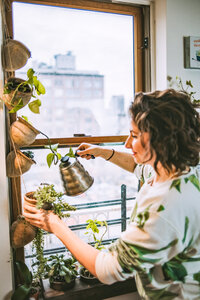
Note: It’s not limited to your backyard. A balcony, a porch, even a window with houseplants counts.
Why Daytime Gardening Doesn't Always Let You Relax
Your eyes are working overtime during the day. You see something, and you immediately think that a plant needs repotting.
Even when you sit down to rest, your brain can’t help but catalog the next task. Perla calls this visual overwhelm.
But that changes at night because when visibility drops, you shift naturally to your other senses. You hear the crickets, the frogs, or feel the cooler air. You smell whatever is blooming in the dark. Your brain stops scanning for problems and starts simply… receiving.
This is actually an example of what mindful gardening is.
The Surprising Way Your Lights Affect Your Garden's Pollinators
We spend so much energy attracting pollinators to our gardens. And then at night, our outdoor lights work against them.
Research shows artificial light at night interferes with the cycles of nocturnal pollinators, insects and migrating birds. Birds at night can get confused by light pollution. Creatures that use the garden for rest, mating, and feeding are interrupted by the glow from our porches and living rooms.
We're unknowingly working against the very ecosystem we're trying to build.
Perla's practical about safety. She recommends:
- Close curtains or blinds so indoor light doesn't spill outside
- Use directed, focused lighting (like a small lamp pointing down, not floodlights)
- Move slowly and quietly so you don't startle resting wildlife
- Try a small handheld flashlight for a short stroll
How to Set Up Your Garden Break After Dark
Before you go out at night, Perla says to use the day to plan.
Walk in your garden in the light. Know where the uneven spots are, where the path is, and where you want to sit. Because at night, you'll naturally follow those same routes and you want them to feel safe and familiar.
What to Actually Do Out There
“But what do I do if I'm not gardening?”
Perla's definition of a good garden break activity is something you genuinely enjoy that doesn't tax your brain more than it already is. The goal is to give your focused attention a chance to relax.
Some ideas that work:
- Just sit and listen. Bird song at dusk, owls hooting, cicadas humming
- Read by a small, focused light
- Journal about your day
- Sketch or color (something with a clear start and finish so you don't feel frustrated)
- Watch your pet explore the space. This is like double biophilia (healing through both your animal and your garden at the same time)
- Look at the night sky
Note: If you're in a cold climate or bad weather, your nighttime garden break can happen indoors, where you sit with your houseplants, looking out the window at snowfall, or journaling by candlelight near a windowsill garden.
Your Garden Is Waiting for You After Dark
Perla shared a story about a client who lives alone and works early morning shifts. When she got home after 5pm, she started going straight into her garden instead of straight to the kitchen. Just 10 or 15 minutes. She'd sit and watch her dog play. She'd listen to the evening sounds.
It helped her feel less alone. It gave her a buffer between her work self and her home self. And eventually, she bought a chair just for that spot in the garden.
So you don't need a moon garden or fancy lighting. You just need to decide that those few minutes belong to you.
Breaks are not a luxury. They're essential. For your mental health, your creativity, and for the people and plants who depend on you.
Mentioned in our conversation:
- Growing Joy Episode 225: Indoor Plant Projects for Stress Relief with Perla Sofía Curbelo-Santiago
- ¡Verdura! – Living a Garden Life: 30 Projects to Nurture Your Passion for Plants and Find Your Bliss by Perla Curbelo-Santiago
Thank you to our episode sponsors:
Manukora
Swap your artificial sweeteners with single-origin manuka honey! Manukora honey is a rich, creamy honey from the remote forests of New Zealand, ethically harvested and packed with powerful nutrients. It contains triple the antioxidants and prebiotics of regular honey, supporting immunity and gut health. Versatile and delicious, it can be used in coffee, smoothies, smoothie bowls, or enjoyed straight from the spoon for an energy boost.
Go to manukora.com/bloom to get up to 31% off the starter kit that includes their 850+ Manukora honey jar, 5 honey travel sticks, a wooden spoon, and a guidebook, PLUS $25 worth of free gifts!
ZenAI
Turn your everyday conversations into a podcast with ZenAI! Just hit record on your phone, have a great conversation, and ZenAI's AI Producer automatically handles the editing, clips, and distribution for you. From recording to publishing to promoting on social media, ZenAI does the heavy lifting so you can focus on what you actually enjoy: talking. And with built-in monetization tools like brand deals and affiliate marketing, you can start earning from your very first episode.
Visit zen.ai to start your first vibecast for free.
Follow Perla:
Website – Spanish
Website – English
Instagram
Facebook
Twitter/X
Follow Maria and Growing Joy:
Order my book: Growing Joy: The Plant Lover's Guide to Cultivating Happiness (and Plants) by Maria Failla, Illustrated by Samantha Leung
Take the Plant Parent Personality Quiz (Get the perfect plants, projects and educational resources for YOUR Lifestyle)
Support Growing Joy with Maria by becoming a Plant Friend on Patreon!
Instagram: @growingjoywithmaria
Tiktok: @growingjoywithmaria
Subscribe to the Growing Joy YouTube channel! /growingjoywithmaria
Website: www.growingjoywithmaria.com
Pinterest: @growingjoywithmaria

Leave a Reply
You must be logged in to post a comment.