

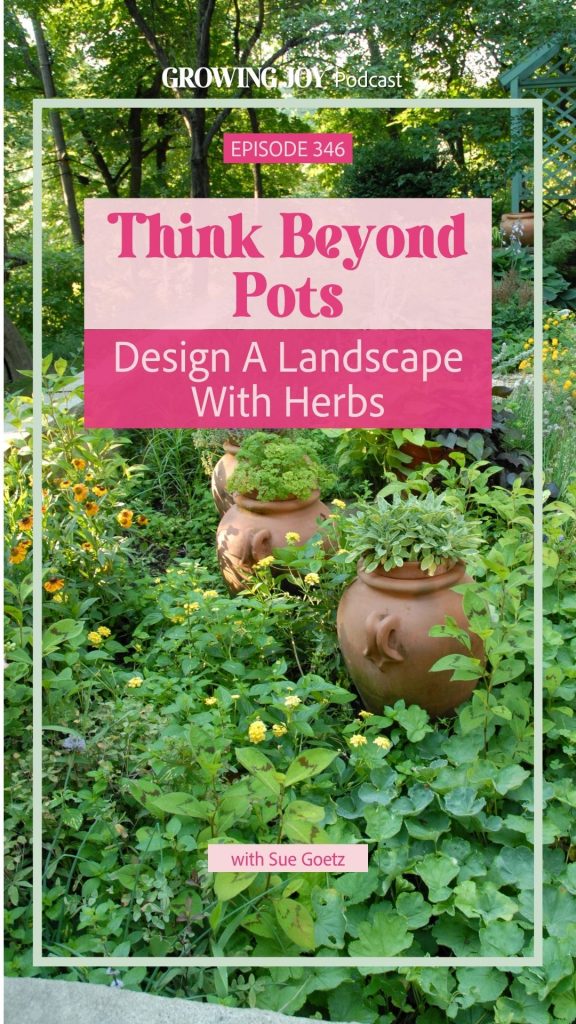
Think Beyond Pots: Design A Landscape With Herbs with Sue Goetz, Ep 346
Don't forget to subscribe to the podcast,
What if herbs go beyond the small, contained, and kitchen-window plants we use them for? Herbs could do so, so much more! In this episode, I sit down with Sue Goetz, a garden designer, author, and herb obsessive, to explore the many different ways we can use our favorite herbs in our garden landscape. She has a five-foot rosemary hedge in her backyard and uses chamomile between her stepping stones. She also grows lavender, sage, and catmint as full-on landscape plants that feed her, scent her garden, attract pollinators, and keep deer out. So not only do herbs have flavor, fragrance, and medicinal properties, they’re also low-maintenance once established. Let's dive in!
In this episode, we learn:
- [01:38] Meet garden designer and author Sue Goetz!
- [02:09] How Sue developed a passion for plants
- [05:07] Why herbs are the most “generous” plants
- [06:28] Why scent is the most underutilized sense in our gardens
- [08:57] How to start treating herbs as large landscape shrubs, trees, and hedges
- [10:45] Which herbs are best for replacing large plants/hedges?
- [12:23] How to get large creeping and upright rosemary hedges
- [15:09] Invest in quality soil and compost to build your garden’s foundation with Espoma Organic!
- [16:33] What are some deer-resistant herbs that we can use as protectors?
- [19:02] Which smaller herbs work best for edging borders and invisible fences
- [20:24] Is Alyssum an herb?
- [20:48] Landscape herb sun needs and chamomile ground cover
- [24:37] How chives double as a sturdy pollinator magnet and an easy DIY gift
- [26:25] How can we use herbs as landscape plants to attract more pollinators?
- [29:04] Why you might be killing your lavender and how it actually wants to be treated
- [32:10] How to pair landscape herbs together (and which aggressive spreaders belong in pots)
- [34:34] Why you should grow what you love and then try one “crazy” experiment
- [38:55] How to use colored basil for landscape pop and cut flower arrangements
- [41:21] Simple ratio for mixing your own herbal bath salts from the garden
- [44:26] Where to find Sue, her blog, and her themed container herb gardening book!
Order my book!
Growing Joy: The Plant Lover's Guide to Cultivating Happiness (and Plants) by Maria Failla, Illustrated by Samantha Leung
Herbs as Landscape Plants
Sue wants us to think bigger because herbs are not only contained in container plants or raised beds.
Herbs can be:
- Hedges – like a row of lavender/rosemary lining your walkway
- Ground covers – creeping thyme between stepping stones
- Large shrubs and trees – elderberry, vitex, ginkgo, bay laurel
- Border plants – curly parsley or nasturtiums along a garden bed edge
Herbs That Can Replace Your Landscape Shrubs
For this, you don’t have to think small.
For Hedges and Large Plants
- Rosemary (Tuscan Blue variety)
- Bay laurel – it's the same bay leaf you put in soups
- Sage – pollinators love it!
- Lavender – classic hedge plant
- Elderberry, vitex, ginkgo – these are trees/large shrubs that are technically herbs
For Ground Covers
- Creeping thyme/woolly thyme – plant it between stepping stones
- Chamomile – used like a lawn in English gardens
- Creeping rosemary – will spill over walls and sidewalks in warm climates
For Borders and Edges
- Curly parsley – tidy little edges along flower beds
- Nasturtium – edible flowers and leaves, plus gorgeous variegated leaves
- Upright thyme (English, lemon, or French) – nice, low, fluffy little hedges along a path
Deer-Resistant Herbs
Sue personally deals with heavy deer pressure and uses herbs as “protectors.” Deer hate the aromatic oils that we and pollinators love. Her top deer-resistant picks:
- Lavender, rosemary, sage – deer almost always avoid these
- Catmint – she plants this around roses so deer won't reach through it to eat the roses (she calls it an “invisible fence”)
- Santolina (Lemon Fizz variety) – chartreuse yellow, very aromatic, drought-tolerant
- Chives – deer-resistant and a pollinator magnet when in bloom
How to Grow Lavender Successfully
Sue said she gets asked this constantly. Her opinion is that we’re too nice to it. Lavenders literally grow in poor soil, so stop babying it!
Here’s what it actually needs:
- Give it full sun
- Plant in well-draining, poor, even rocky soil
- If you have a rainy or humid climate, mulch around the base with gravel or white rock to prevent moisture from sitting at the roots
- Once established (about one year), don't water it
- Avoid self-watering containers
Pro tip: If you're in a colder climate (USDA Zone 4 or lower), look for the variety ‘Arp,‘ which is an upright rosemary that handles cooler temperatures better than most.
A Simple Herbal Landscape Layer Cake
If you want to try this concept in your garden, Sue suggests thinking in layers:
- Top layer (large shrub) – Elderberry or vitex
- Middle layer – Lavender, sage varieties, or rosemary
- Ground layer – Chamomile, creeping thyme, or creeping rosemary
One important caveat: Keep mint and lemon balm in containers. They're wanderers that will bulldoze everything around them if planted in the ground.
Bonus: Garden-to-Bath Herb Salts
One takeaway from this conversation that I really like is that Sue also makes herbal bath salts from what she grows!
Her basic formula: For every 1 cup of Epsom salt or sea salt, use about ½ cup of dried herbs. Add a little baking soda to neutralize the water's pH so your skin can better absorb the herbs' healing qualities.
Sue's favorite herbs for bath salts:
- Rugosa roses – softens skin
- Lavender – a classic scent
- Chamomile – soothing and gentle
- Lemon verbena – cleansing, helps clear oils, smells divine
Pour the mix into a thrifted glass jar, tie on a ribbon, and you've got a garden-made gift that costs almost nothing.
Mentioned in our conversation:
Thank you to our episode sponsors:
Espoma Organic
Give your herbs the best soil with Espoma Organic's potting mixes! Espoma Organic is dedicated to making safe indoor and outdoor gardening products for people, pets, and the planet. They have an amazing variety of high-quality, organic potting mixes, garden soil, fertilizers, and pest control products that are organic and eco-friendly. To top it all off, they have a huge sustainability commitment with a 100% solar-powered plant, zero-waste manufacturing, and eco-friendly packaging.
Visit espoma.com to find your local Espoma dealer or check my Amazon storefront.
ZenAI
Turn your everyday conversations into a podcast with ZenAI! Just hit record on your phone, have a great conversation, and ZenAI's AI Producer automatically handles the editing, clips, and distribution for you. From recording to publishing to promoting on social media, ZenAI does the heavy lifting so you can focus on what you actually enjoy: talking. And with built-in monetization tools like brand deals and affiliate marketing, you can start earning from your very first episode.
Visit zen.ai to start your first vibecast for free.
Follow Sue:
Website
The Herb Lover's Garden
Instagram
Facebook
Follow Maria and Growing Joy:
Order my book: Growing Joy: The Plant Lover's Guide to Cultivating Happiness (and Plants) by Maria Failla, Illustrated by Samantha Leung
Take the Plant Parent Personality Quiz (Get the perfect plants, projects and educational resources for YOUR Lifestyle)
Support Growing Joy with Maria by becoming a Plant Friend on Patreon!
Instagram: @growingjoywithmaria
Tiktok: @growingjoywithmaria
Subscribe to the Growing Joy YouTube channel! /growingjoywithmaria
Website: www.growingjoywithmaria.com
Pinterest: @growingjoywithmaria

Leave a Reply
You must be logged in to post a comment.