



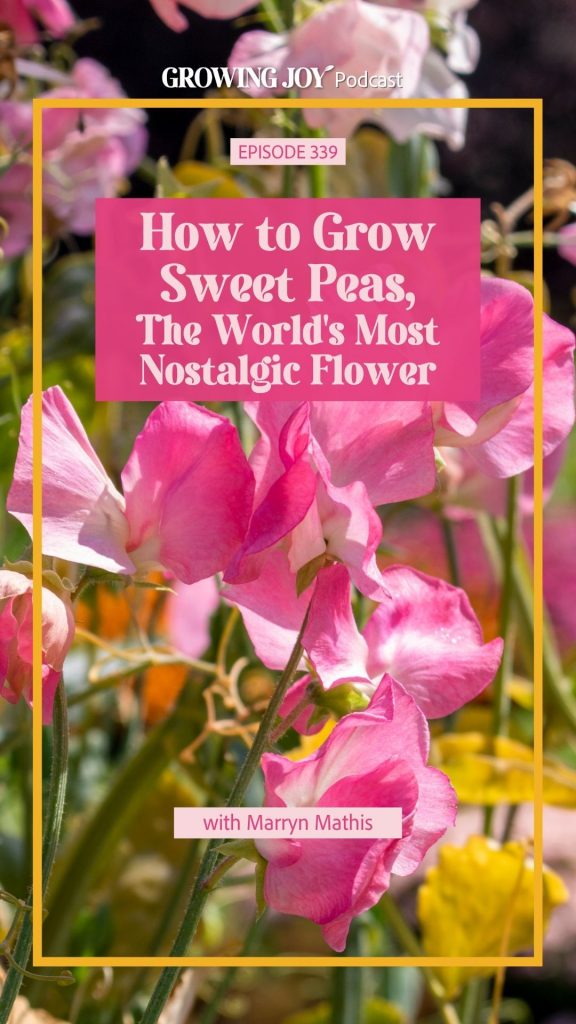
How to Grow Sweet Peas, The World’s Most Nostalgic Flower with Marryn Mathis, Ep 339
Don't forget to subscribe to the podcast,
Don't sweet peas have the most amazing floral scent? I remember them as a scent before I ever knew them as a flower, like the Bath & Body Works body spray that no other brands can seem to replicate. Then I realized I had never actually done an episode on these before, so there’s no better time than to invite my dear plant friend, Marryn Mathis, the Sweet Pea Queen, to share her story! Marryn quit a 21-year IT career, moved her family onto raw land in a 28-foot travel trailer, and built The Farmhouse Flower Farm from the ground up. She's now growing 40,000 sweet pea seedlings a season, breeding her own varieties, and just wrote a book on the subject! Let's get growing!
In this episode, we learn:
- [02:49] Meet Marryn Mathis, the Sweet Pea Queen!
- [06:51] Growing flowers at scale without formal training
- [08:12] Growing cut flowers for florists vs. harvesting seeds for sale
- [09:14] What’s her process of breeding and naming a new Sweet Pea variety?
- [10:52] Why Sweet Pea deserves more popularity!
- [13:38] What’s the history behind Sweet Pea? (Hint: It started in Sicily!)
- [15:37] Learn to grow a bounty of bouquets in small spaces with Lisa Ziegler’s Cut Flower Handbook!
- [16:55] Start your seeds and feed your garden with organic gardening products from Espoma Organic!
- [18:47] How sweet peas migrated from garden fixtures into the cut flower industry
- [19:38] What is the sweet pea fragrance scale and how do you differentiate them?
- [21:31] Spencer sweet peas vs. other varieties
- [22:37] How to grow sweet peas in hot climates and warmer zones (like Florida and Texas)
- [24:31] Starting sweet peas from seed vs. buying garden center seedlings
- [24:45] How to start sweet peas from seed
- [26:25] The #1 mistake people make when growing sweet peas
- [27:06] The 55-degree germination temperature for sweet pea seeds
- [29:51] When to transplant indoor-started sweet peas
- [31:27] How sunlight and location impact the lifespan of your sweet peas
- [32:58] How to set up drip irrigation for sweet pea beds
- [36:17] How to create a magical “Sweet Pea Tunnel” with cattle panels
- [37:15] What are the biggest mistakes beginners make with sweet peas?
- [39:45] Some cutting tips for sweet peas
- [41:38] Is there a way to preserve sweet pea scent after cutting?
- [41:51] What are the best workhorse sweet pea varieties for beginners?
- [45:30] Where to find Marryn, her seeds, and her farm!
- [46:10] Check out their new storefront on their farm!
Order my book!
Growing Joy: The Plant Lover's Guide to Cultivating Happiness (and Plants) by Maria Failla, Illustrated by Samantha Leung
What are Sweet Peas?
Sweet peas were originally discovered in Sicily by a monk named Cupani in the late 1600s.
He found them growing wild on the hillside, collected a few seeds, and sent them to his gardener friends across Europe. That is how the lineage of the modern sweet pea began.
There are over 150 species of sweet peas today. Most of us are familiar with the Spencer varieties, which are known for their long stems and ruffly petals.
But it doesn’t matter if they’re ruffly or wild because they’re all cool-season annuals. That means they want to be in chilly weather, while the air is still crisp.
Sweet Pea types to know:
- Spencer
- Grandiflora
- Early Flowering
- Dwarf
- Perennial
Note: If you want that classic fragrance, look for Grandiflora varieties because they are often more scented than the modern hybrids.
The Secret to Growing Sweet Peas From Seed
Marryn recommends starting sweet peas from seed every time! It’s not very difficult to do, don’t worry.
You can use a normal potting soil or even just the dirt from your backyard. Espoma has great soil mixes!
The seeds are large and the root systems are incredibly strong. Marryn says they are often off to the races as soon as they hit the soil. Sometimes they are literally springing out of the seed tray because they are so excited to grow.
How to start your seeds:
- Poke a hole an inch deep
- Plop one seed in the soil
- Cover it up and water well
- Wait 10 to 14 days for germination
Keep your seeds between 50 and 55 degrees. If you use a heat mat, you will likely end up with weak plants. So don’t!
If your seedlings look lanky, they are probably too warm or craving more light. And do not overthink your watering. Just water them enough and let them work their magic.
So what if you live in a hot climate like I do? You can start them in a damp paper towel in the fridge. Once you see a tiny root, move them into a pot in an air-conditioned room.
Finding the Right Variety for Your Zone
I live in Zone 10b in South Florida now, so I honestly thought my sweet pea days were over because it is just too hot here. It turns out I was just looking at the wrong varieties!
People get lured in by the Spencer varieties, but they need 12 hours of sunlight to start their bloom cycle and the plants often wilt from the heat before they even flower.
So it’s important to choose early-flowering sweet peas. These varieties only need 10 hours of light to start blooming.
Varieties to look for:
- Spring Sunshine
- Winter Elegance
- King’s Ransom
- Blue Shift
Note: If you are in a southern state like Texas or Louisiana, try fall sowing in late October.
Sweet Pea Trellis Ideas for Long, Straight Stems
I have always loved a whimsical, wild look in my garden. But Marryn said that if you want those elegant stems for bouquets, you have to be a bit of a control freak.
These vines are surprisingly heavy as they grow. So if your support is flimsy, the whole thing will just flop over once they bloom.
Marryn uses Hortonnova netting attached to T-posts on her farm. But you can get creative with sweet pea trellis ideas based on what you already have at home.
Keep a roll of twist tie wire on your tool belt at all times to secure new growth.
Sweet pea trellis ideas:
- Cattle panels bent into a magical Sweet Pea tunnel
- Existing chain link fences
- Bamboo sticks tied into a teepee in a pot
- Arbors or Obelisks
The secret to those professional stems is a technique called corralling. You use baling twine or wire to keep your vines tight against your netting.
And you want to focus on tying the main stem to your support as it reaches up. This forces the plant to grow straight up and out rather than tangling into a messy bird's nest.
Planting the Seed of Joy with Sweet Peas
I am already counting down the days until October so I can get my fall planting started. Even as a new member of the boy mom club, I know I will find time to sprinkle a few seeds and see what happens.
If Marryn can build a forever farm from a late-night Redfin search, you can definitely grow a few beautiful blooms!
Mentioned in our conversation:
- Sweet Pea School Book by Marryn Mathis
- PRO-MIX Potting Mix
- Espoma Potting Soil Mix
- Growing Joy 246: What is Regenerative Gardening and Permaculture? with Stephanie Rose of Garden Therapy
Thank you to our episode sponsors:
Quarto: The Cut Flower Handbook by Lisa M Ziegler
One of the most joyful things you can do in the garden is to grow flowers! If you are interested in upping your cut flower game, make sure to grab The Cut Flower Handbook by professional flower farmer Lisa M Ziegler. It is the bouquet-building bible gardeners have been waiting for! Included in The Cut Flower Handbook are 50 extensive flower profiles, planting tips, instructions, and images on how to pinch plants, how to make your cuts, how to dig a planting bed, and more. Plus, there are over 200 photos of the best cut flowers for home gardeners to grow and advice on caring for a cutting garden.
Pick up The Cut Flower Handbook at your favorite local bookstore, quarto.com, bookshop.org, Barnes & Noble or amazon.com.
Espoma Organic
Set your sweet peas and yourself up for success with the best potting mix! Espoma Organic is dedicated to making safe indoor and outdoor gardening products for people, pets, and the planet. They have an amazing variety of high-quality, organic potting mixes, garden soil, fertilizers, and pest control products that are organic and eco-friendly. To top it all off, they have a huge sustainability commitment with a 100% solar-powered plant, zero-waste manufacturing, and eco-friendly packaging.
Visit espoma.com to find your local Espoma dealer or check my Amazon storefront.
Follow Marryn:
Website
Instagram
Facebook
YouTube
Shop
Follow Maria and Growing Joy:
Order my book: Growing Joy: The Plant Lover's Guide to Cultivating Happiness (and Plants) by Maria Failla, Illustrated by Samantha Leung
Take the Plant Parent Personality Quiz (Get the perfect plants, projects and educational resources for YOUR Lifestyle)
Support Growing Joy with Maria by becoming a Plant Friend on Patreon!
Instagram: @growingjoywithmaria
Tiktok: @growingjoywithmaria
Subscribe to the Growing Joy YouTube channel! /growingjoywithmaria
Website: www.growingjoywithmaria.com
Pinterest: @growingjoywithmaria

Leave a Reply
You must be logged in to post a comment.