



advanced plant care, Gardening, General Plant Care Guides, Individual Plant Care Guides, plant care, plant science, podcast
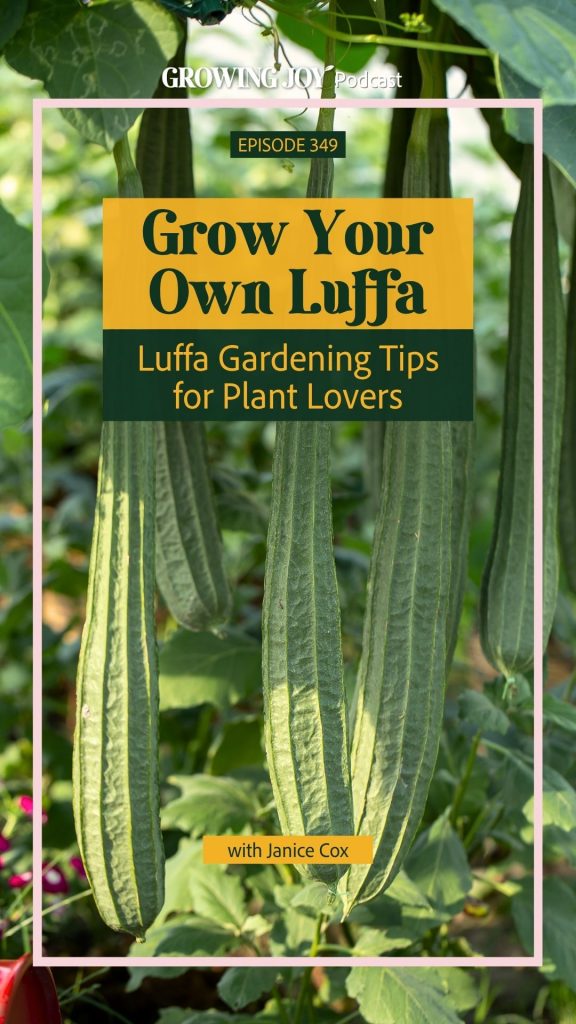
Grow Your Own Luffa: Luffa Gardening Tips for Plant Lovers with Janice Cox, Ep 349
Don't forget to subscribe to the podcast
Have you ever thought about growing your own luffa? Someone sent me a packet of luffa seeds about four years ago. I think I won them in a giveaway, and they just… sat there. I never planted it because something about luffa felt kinda different. It's not your classic garden edible, and I couldn't picture how it worked. So I invited Janice Cox over to talk about growing luffa! Janice is a garden and natural beauty expert, and she's written a whole workbook on this plant. Now I can't stop thinking about growing luffa, harvesting it, and figuring out what to make with it. Turns out it's way simpler than I built it up to be in my head. Learn with me!
In this episode, we learn:
- [01:47] Meet Janice Cox, the luffa queen!
- [02:34] What is luffa, and why does it have so many surprising uses?
- [04:10] How Janice backed into gardening through natural beauty writing
- [05:57] Why clean beauty pushed her toward aloe vera and label-reading in the US
- [10:12] How luffa went from ancient Egypt to WWII oil filters
- [12:18] Turning a luffa harvest into soap, crafts, and pet toys
- [15:29] Feed your midsummer garden with Espoma Organic!
- [17:47] What does luffa need to grow? (full sun, pollinators, and a trellis)
- [19:54] Male vs. female flowers and hand-pollinating your luffa
- [22:06] What the luffa growth stages look like and how to know when to harvest
- [25:24] Water and light requirements for luffa
- [26:44] How do you process your luffa? (peeling, saving seeds, and cleaning for gifts)
- [29:09] Direct sowing vs. starting luffa seeds indoors
- [30:58] How to slice, flatten, and sew with dried luffa
- [33:59] What are the different luffa varieties?
- [35:52] What are the most common mistakes first-time luffa growers make?
- [38:30] Why luffa makes a great gift and a full-circle, sustainable plant
- [40:15] Luffa seed tips: nicking, soaking, and testing for viability
- [42:06] Where to find Janice, her books, and her guides
Order my book!
Growing Joy: The Plant Lover's Guide to Cultivating Happiness (and Plants) by Maria Failla, Illustrated by Samantha Leung
What is Luffa?
Luffa is a gourd, in the same family as cucumbers and squash, so if you can grow either of those, you can grow this! The difference is what you do with it at the end. You let it dry, and that becomes the luffa sponge you already know from your shower.
In fact, people have been growing it for a very long time. It's an ancient plant that dates back to Egyptian times/old hieroglyphics, used over the centuries for sandals, water filters, and even oil filters in trucks during World War II.
So if you want to grow it for sponges, Janice says the variety to look for is Luffa aegyptiaca! Just know that garden stores rarely label it that cleanly.
Note: Look for the Latin name on the seed packet when you can. The common names get confusing fast, and they're spelled about three different ways.
The 3 Things Every Luffa Plant Needs
Luffa is a tropical, warm-weather climber, so it really comes down to three things:
- Full sun
- Pollinators
- Support
It loves heat, which is why it grows in warm states like Florida, Texas, and California. But you can still grow it somewhere cooler. Janice gardens in Oregon and grows hers in dark pots, since the dark color soaks up warmth and keeps the roots cozy.
Once it's happy, luffa climbs, so it needs a trellis or fence to hold onto. Some people even build “luffa lounges,” covered structures you can sit inside while the vines hang down around you. You can also plant a few flowers nearby to bring in pollinators!
Starting Seeds and Planting Luffa
You can direct sow or start luffa indoors (Janice does both depending on the year, and uses newspaper or cardboard pots in the past).
There are two luffa varieties you can choose from based on what you plan to use them for:
- Luffa aegyptica – the sponge gourd we all know
- Wild/ornamental luffa
Seeds have a hard shell, so she recommends nicking them with a toenail clipper or sandpaper and soaking 24 hours before planting to improve water absorption.
For testing old seed viability, she uses the damp paper towel + plastic bag method.
When and How to Harvest Your Luffa
You'll know a luffa is ready when the green gourd turns brown and papery on the vine. It'll feel crunchy when you squeeze it, and you'll hear the seeds rattling around inside.
From pollination to that point takes about 75 to 90 days, depending on your climate.
Once it's dry, harvesting is simple:
- Cut off both ends of the gourd
- Shake out the seeds into a bowl and save them
- Peel off the brown outer skin
Beneath is the sponge you've been growing all along. From here, you can leave it as is, or soak it in a little diluted hydrogen peroxide or vinegar to lighten the color for gifting.
One thing to remember: let it air dry (never put it in the dryer), since that hardens it up. Homegrown luffa is softer than the commercial kind, and that's exactly what you want.
What to Do With Your Luffa Harvest
A luffa sponge is best known for the shower, where it works as a natural exfoliator. Just keep it off your face and any sensitive spots, though.
But it's useful well beyond the bathroom:
- Kitchen scrubber for pots and glassware
- Soap add-in for exfoliating texture
- Pet and bird toys stuffed with birdseed
- Gift basket toppers tied on with a slice
- Compost when you're done with it (my fave!)
Luffa is completely sustainable! It also makes a great gift, like a homegrown luffa tied to a jar of bath salts or a bar of soap to make it more personal.
Start Growing Your Own Luffa (Like Me!)
I went into this thinking luffa was for my audience, not for me. But now it's my next obsession plant!
Luffa’s easier than it looks, it feeds the pollinators, and at the end, you get something you can actually use.
So this year I'm filling my beds with flowers, and the luffa is going right up the trellis alongside them.
Mentioned in our conversation:
- Growing Joy 310: Digital Detox: What 3 Days in Nature Taught Me (and How You Can Recreate It at Home)
- Growing Joy 319: How to Preserve Food From Your Garden with Staci and Jeremy Hill
- Janice Cox’s books:
Thank you to our episode sponsors:
Espoma Organic
Give your garden a midsummer pick-me-up with Espoma Organic's fertilizers! Espoma Organic is dedicated to making safe indoor and outdoor gardening products for people, pets, and the planet. They have an amazing variety of high-quality, organic potting mixes, garden soil, fertilizers, and pest control products that are organic and eco-friendly. To top it all off, they have a huge sustainability commitment with a 100% solar-powered plant, zero waste manufacturing, and eco-friendly packaging.
Visit espoma.com to find your local Espoma dealer or check my Amazon storefront.
ZenAI
Turn your everyday conversations into a podcast with ZenAI! Just hit record on your phone, have a great conversation, and ZenAI's AI Producer automatically handles the editing, clips, and distribution for you. From recording to publishing to promoting on social media, ZenAI does the heavy lifting so you can focus on what you actually enjoy: talking. And with built-in monetization tools like brand deals and affiliate marketing, you can start earning from your very first episode.
Visit zen.ai to start your first vibecast for free.
Follow Janice:
Follow Maria and Growing Joy:
Order my book: Growing Joy: The Plant Lover's Guide to Cultivating Happiness (and Plants) by Maria Failla, Illustrated by Samantha Leung
Take the Plant Parent Personality Quiz (Get the perfect plants, projects and educational resources for YOUR Lifestyle)
Support Growing Joy with Maria by becoming a Plant Friend on Patreon!
Instagram: @growingjoywithmaria
Tiktok: @growingjoywithmaria
Subscribe to the Growing Joy YouTube channel! /growingjoywithmaria
Website: www.growingjoywithmaria.com
Pinterest: @growingjoywithmaria

Leave a Reply
You must be logged in to post a comment.