

How Houseplants Get Made: Plant Breeding, Trend Forecasting and What It Takes to Grow Millions of Plants with Justin Hancock, Ep 360
Don't forget to subscribe to the podcast,
Have you ever picked up a plant at the garden center and wondered how the houseplants even get here? I didn't think about it much until I was invited to speak at Cultivate, one of the biggest horticulture industry conferences, and I spent the whole time walking the halls. I'd been caring for plants for years. But I had no idea how much love and time go into getting one plant onto a store shelf. So I asked my friend Justin Hancock to walk us through it. Justin is a horticulturist at Costa Farms, the largest houseplant grower in the world. We talked about plant hunters, secret R&D areas in greenhouses, years of testing, and literally millions of cuttings before a plant ever makes it onto a store shelf! Let's dive in!
In this episode, we learn:
- [01:33] Come hang out with me over on Substack!
- [02:58] Welcome back, Justin Hancock!
- [05:19] Why the horticulture industry is so grounded and generational
- [06:30] What has Justin’s experience in the horticulture industry been like?
- [07:38] Why many horticulture businesses are passed down through generations
- [09:29] How a plant gets from discovery to your local garden center
- [11:12] What is a plant hunter, and how do you become one?
- [12:14] What makes a good new houseplant
- [14:00] How long does a plant spend in R&D before it hits shelves?
- [14:11] How growers forecast plant trends years ahead of social media
- [15:51] Meet the plant rebels who changed history in Rebel Gardeners by Camilla Anderson!
- [17:43] Plant hunting vs. plant breeding
- [19:35] Why aureums are so shy to flower…
- [20:52] What happens after a plant passes R&D? (propagating from one cutting to thousands)
- [22:40] Costa's five-point testing process and why variegated plants are so tricky to produce
- [24:40] The other roles that touch plants before they reach the garden center
- [25:19] How Costa is making its potting mixes more sustainable and locally sourced
- [26:33] How many plants make it out of R&D (and the Monstera subpinnata that flopped)
- [28:37] How tissue culture fits into plant hunting and production
- [29:33] What is tissue culture, and how is it different from growing from a cutting?
- [30:53] Should everyday plant parents buy tissue culture plants?
- [34:01] When trends move faster than production: the pink princess philodendron
- [36:12] What's hot right now and the new genera coming out of R&D
- [38:55] Inside Justin's book, The New Complete Guide to Houseplants
- [40:40] Bonus plant profiles and signed copies when you pre-order through Costa Farms!
- [42:31] Rapid-fire questions: underrated & overhyped houseplants
- [44:00] The plant Justin always kills, and the one he grows best!
- [45:30] The one thing he wishes every person understood about their houseplants
Order my book!
Growing Joy: The Plant Lover's Guide to Cultivating Happiness (and Plants) by Maria Failla, Illustrated by Samantha Leung
Where Do Houseplants Come From?
Justin says that it involves a lot of people, a lot of testing, and a lot of patience.
Every new plant at Costa Farms follows the same basic path:
- Found
- Tested
- Multiplied
- Shipped
This doesn't happen fast. On average, it takes 3 to 5 years from the moment a plant is discovered until it reaches your local garden center.
It may seem that when a plant goes viral online, it feels like it shows up overnight.
But by the time you see it in stores, growers have been quietly working on it for years. Some plants get cut before they ever launch.
It All Starts With a Plant Hunter
Costa's lead plant hunter, Mike, has about 50 years in the industry.
He's hunted plants on 6 of the 7 continents, working with breeders, nurseries, and botanical gardens to find varieties nobody has sold yet.
Sometimes he comes home with just one pot. Then it has to make it through customs and spend about 6 months recovering from shipping stress.
After that, it moves into a secret R&D corner of the farm. Justin also clarifies that Costa does zero breeding. Their job is to find great plants and bring them to market.
What Makes a Good New Houseplant?
I remember when the Philodendron ‘Birkin' hit the market. People brought it home, gave it too little light, and watched it turn plain green.
This problem is what growers try to catch early. And Costa's plant hunter has a great rule: “The slower it grows, the slower it dies under mistreatment.”
So they look for:
- Slow growth
- Thick cuticles
- Good growth habit
- Stable variegation
Then every plant goes through a five-point testing process. It has to grow well in your home. It also has to survive Miami's open shade houses, where three inches of rain can fall in half an hour.
Plus, it has to propagate well. One variegated plant had a 40% reversion rate, meaning 4 out of 10 cuttings turned green.
How One Plant Becomes Millions of Plants
We've all turned one pothos cutting into a new plant. Costa does the same thing but on a massive scale.
One cutting becomes two, two become four, until there are enough mother plants to keep production going.
Most of those come from thousands of mother plants on Costa's farm in the Dominican Republic.
Some plants, like Monstera Thai Constellation, come from tissue culture instead. It means growing tiny plants from stem cells.
Note: Tissue culture plants are fragile.
How Growers Predict Houseplant Trends
When I started getting into plants, I remember a tiny Pilea peperomioides cutting cost $50. Now I see them at Trader Joe's for $2.99.
So how do growers keep up with trends when their timeline takes years? Justin says it’s through forecasting.
His team watches trade shows like Cultivate and TPIE. They also keep an eye on Europe and Australia, since trends there often reach the U.S. two or three years later.
But they don't always become the first to know. For example, Costa caught only the tail end of the Pink Princess Philodendron craze.
Houseplant Trends to Watch in 2027
Justin says that monsteras have been the icon of houseplants for years, and he doesn't see that changing.
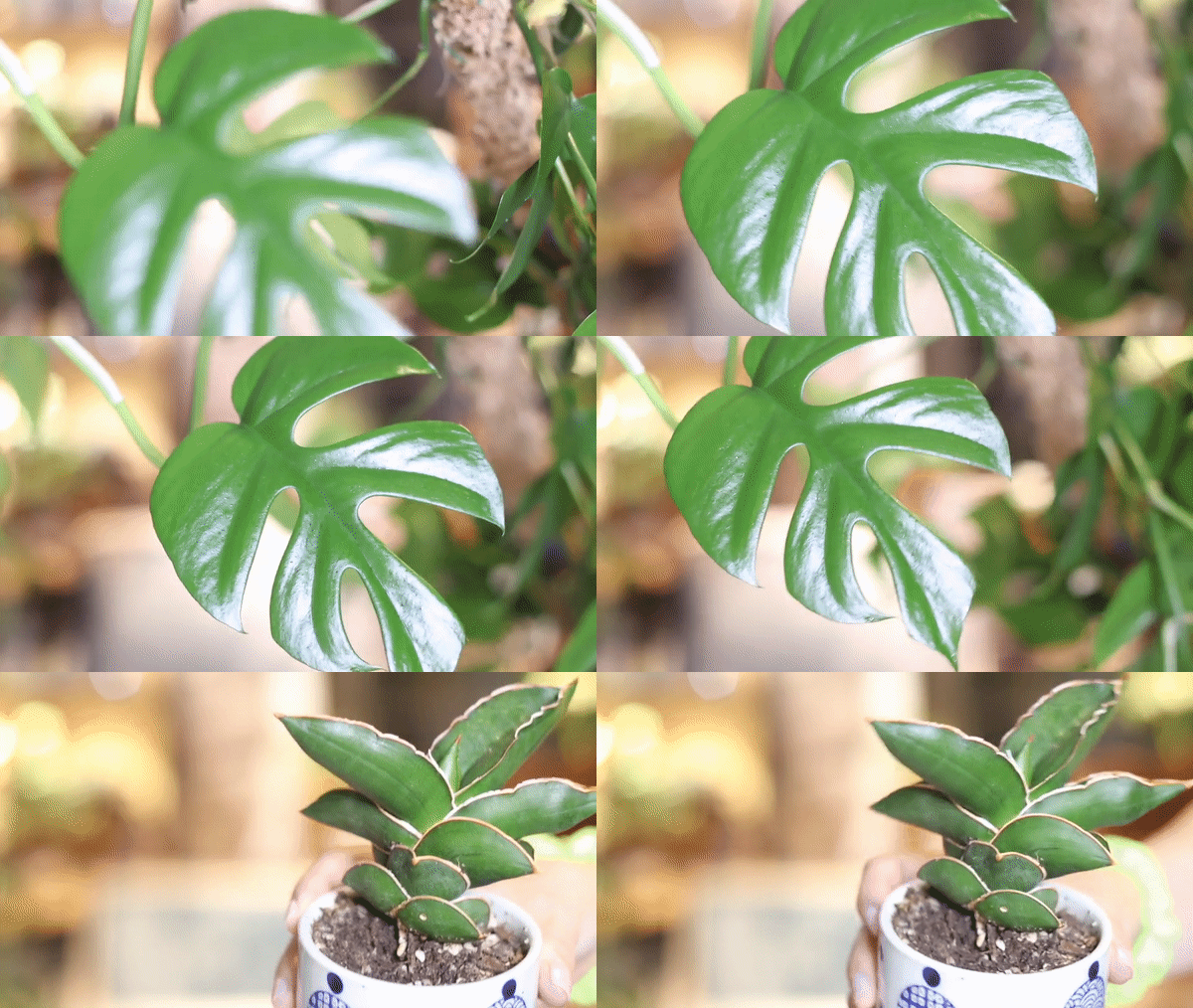
He's also excited about the Monstera Bulbasaur (Monstera deliciosa ‘Bulbasaur'), which Costa just launched. It's already on fire, and he expects it to stay hot into early 2027.
Then there are the new genera. Costa loves testing plants most people have never grown indoors, like:
- Rhodospatha – a slow-climbing aroid with purple-green leaves and rusty red undersides
- Geogenanthus ciliatus
There's more in the R&D pipeline that Justin couldn't share yet. But if those plants pass their final tests, we'll see some brand-new names on shelves soon!
Get Justin's Book: The New Complete Guide to Houseplants
Justin says that your plants want more light than you're giving them.
And if you want more of his expertise, grab Justin's new book, The New Complete Guide to Houseplants. It covers light, watering, and care, plus an encyclopedia of nearly 100 houseplants.
It comes out December 1st. And if you pre-order through Costa Farms, Justin will sign your copy and you'll get about 20 bonus plant profiles!
Mentioned in our conversation:
- The New Complete Guide to Houseplants by Justin Hancock
- Mike Rimland (Plant hunter at Costa Farms)
- Monstera Bulbasaur
- Growing Joy 357: Motherhood, Seasons of Life and Changing Plant Passions with Becca De La Plants
- Growing Joy 300: Exploring the Different Types of Pothos: From Marble Queen to Albo to Climbing Giants with Justin of Costa Farms
Thank you to our episode sponsor:
Quarto: Rebel Gardeners by Camilla Anderson
Want to discover the bold, boundary-breaking people who shaped the plant world we love today? Camilla Anderson's Rebel Gardeners: Groundbreaking Mavericks and Unsung Pioneers of Gardening and Botany just might be what you're looking for! This beautifully illustrated book profiles 30 people from around the world who used plants to challenge convention, advance science, protect the environment, and spark social change. You'll meet familiar names like George Washington Carver and Robin Wall Kimmerer alongside voices from horticulture history that many of us have never heard before. It's a reminder that gardening has never been just about growing something beautiful, and it's a coffee table book you'll actually want to read.
Grab your copy of Rebel Gardeners at quarto.com, wherever books are sold, or through your local bookstore.
Follow Costa Farms:
Website
Instagram
Facebook
YouTube
TikTok
Pinterest
LinkedIn
Follow Maria and Growing Joy:
Order my book: Growing Joy: The Plant Lover's Guide to Cultivating Happiness (and Plants) by Maria Failla, Illustrated by Samantha Leung
Take the Plant Parent Personality Quiz (Get the perfect plants, projects and educational resources for YOUR Lifestyle)
Support Growing Joy with Maria by becoming a Plant Friend on Patreon!
Instagram: @growingjoywithmaria
Tiktok: @growingjoywithmaria
Subscribe to the Growing Joy YouTube channel! /growingjoywithmaria
Website: www.growingjoywithmaria.com
Pinterest: @growingjoywithmaria

Leave a Reply
You must be logged in to post a comment.