




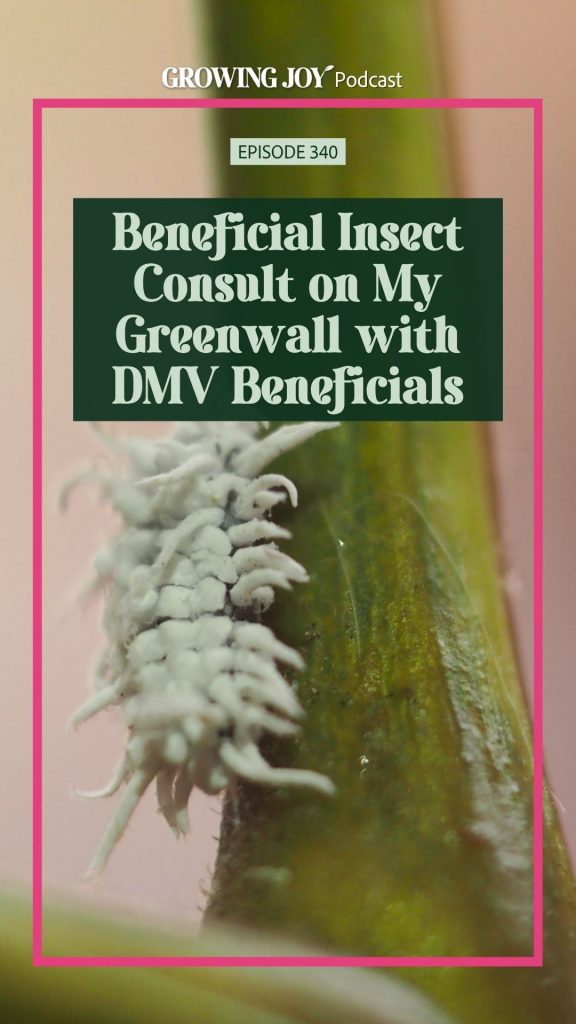
Beneficial Insect Consult on My Greenwall with DMV Beneficials, Ep 340
Don't forget to subscribe to the podcast,
Do you have the guts to release beneficial insects in your home? I recently invited Jamie, the co-founder of DMV Beneficials, into my studio to do exactly that. We spent the afternoon performing a professional consultation on my green wall. We examined my alocasia, philodendron, hoya, and more under a microscope to see what was really going on. We found broad mites, spider mite eggs, and a possible infestation starting on my rabbit's foot fern. It was a little scary, but probably the best way to recreate nature right in our living rooms is to release these beneficial insects.
You can watch the full video of our release on my YouTube channel if you want to see these bugs in action!
In this episode, we learn:
- [02:03] What to expect from this unique live-audio episode
- [07:04] Meet Jamie from DMV Beneficials and what her company offers!
- [08:46] What are beneficial insects?
- [09:53] How Jamie conducts a live pest diagnostic check
- [12:27] What kind of microscope should you use to look for pests?
- [14:05] Why we start diagnostics with plants like Alocasia and Philodendron
- [15:35] Experience the richness of single-origin honey with 3x more antioxidants with Manukora!
- [17:20] How to identify eggs vs. dust
- [19:45] Is it normal to see pests on your plants?
- [22:12] Checking for thrips on a philodendron
- [24:24] Are beneficial bugs safe to use in a home with birds and pets?
- [24:49] Identifying broad mites and how they get inside your home
- [27:40] What to look for when checking Hoyas for flat mites
- [29:48] Let’s check my fern for pests
- [32:58] How to use keystone plants to assess your plant population health
- [33:26] How to release soil predators (Stratiolaelaps) to your pots
- [35:22] How to aesthetically place and hang beneficial insect sachets
- [39:02] Treating ferns and hoyas with the beneficial insects!
- [43:21] How to safely release lacewings to your plants
- [46:44] How to use a hex cell to treat 60 plants with one release
- [49:19] Where to find Jamie, DMV Beneficials, and local bug chapters!
Order my book!
Growing Joy: The Plant Lover's Guide to Cultivating Happiness (and Plants) by Maria Failla, Illustrated by Samantha Leung
What Are Beneficial Insects for Houseplants?
Beneficial insects are predatory bugs that eat the pest bugs that attack your plants. In simple terms, “Good bugs for bad bugs.”
It’s about balance. Don’t you realize that we spend so much time on grow lights and humidifiers to replicate nature, but we normally skip over this part entirely?
The right beneficial insect depends on the pest.
Common ones to know:
- Spider mites (especially on Alocasia)
- Thrips (especially on Philodendron)
- Broad mites (can hit almost any plant)
- Flat mites (showing up more in Hoyas and Anthuriums)
- Fungus gnats (soil-dwelling, super common)
Note: No active pests confirmed = you can still use beneficials preemptively.
How to Do a Plant Pest Diagnostic at Home
Jamie's process starts before the microscope even comes out.
First, check the overall vibe. Jamie looks at keystone plants first! These are the plants that act as magnets for specific pests.
- Is the leaf vibrant?
- Are new leaves coming in consistently?
- A stressed/dull plant is your first clue to look closer.
Then, grab a microscope. Jamie uses a $29.99 app-connected microscope from Amazon, by the way.
How to scope your plants:
- Start at the leaf veins (this is where the pests live)
- Check both old leaves and new
- Hold the scope still and wait… mites will walk into frame
- Round = egg. Jagged = dust.
Note: The microscope doesn't just confirm pests. It confirms when something isn't a pest issue, so you're not reaching for a pesticide unnecessarily.
How to Apply Beneficial Insects Indoors
Jamie brought three types of beneficials to my greenwall, and each one works differently:
- Stratiolaelaps: soil predators that hunt for pests hiding in your potting mix (just a tablespoon or two sprinkled on top does the trick).
- Predatory mite sachets: hang directly on the plant.
- Lacewing larvae: generalist predators (they eat almost everything); released from a hex cell or bottle
A few things to know before you release:
- Rinse your plants first to reduce the current population.
- Hang sachets on a stem, not the soil
- Lacewings can be released outdoors if you're nervous about them inside
Why Beneficial Insects Work Better Than Pesticides
Most of us reach for a spray the second we spot something. But Jamie said that using pesticides preventatively is like taking antibiotics when you're not sick. It leads to pesticide resistance, and over time, it stops working.
Beneficials don't have that problem. They're part of a natural system that's been working long before we started buying pest sprays.
If you are ready to try this in your own home, please support Jamie and DMV Beneficials. They even have a damage dictionary on their website to help you identify what is going on with your leaves!
Plus, if you’re not aware, Jamie and I collaborated on a free Ultimate Houseplant Pest Guide that you can download right now to help you manage the top six houseplant pests!
Mentioned in our conversation:
- Growing Joy 272: Beneficial Insects For Effortless Houseplant Pest Management with Jamie of DMV Beneficials
- The Ultimate Guide to Houseplant Pests
- DMV Beneficials Shop
- Neem Oil
- Lacewing Larvae in Hexcell (400 Count)
- Cryptolaemus Larvae in Bottle (250 Count)
- Stratiolaelaps Mites in Bottle (12500/25000/125000)
Thank you to our episode sponsor:
Manukora
Swap your artificial sweeteners with single-origin manuka honey! Manukora honey is a rich, creamy honey from the remote forests of New Zealand, ethically harvested and packed with powerful nutrients. It contains triple the antioxidants and prebiotics of regular honey, supporting immunity and gut health. Versatile and delicious, it can be used in coffee, smoothies, smoothie bowls, or enjoyed straight from the spoon for an energy boost.
Go to manukora.com/bloom to get up to 31% off the starter kit that includes their 850+ Manukora honey jar, 5 honey travel sticks, a wooden spoon, and a guidebook, PLUS $25 worth of free gifts!
Follow DMV Beneficials:
Website
Instagram
Facebook
X
YouTube
Follow Maria and Growing Joy:
Order my book: Growing Joy: The Plant Lover's Guide to Cultivating Happiness (and Plants) by Maria Failla, Illustrated by Samantha Leung
Take the Plant Parent Personality Quiz (Get the perfect plants, projects and educational resources for YOUR Lifestyle)
Support Growing Joy with Maria by becoming a Plant Friend on Patreon!
Instagram: @growingjoywithmaria
Tiktok: @growingjoywithmaria
Subscribe to the Growing Joy YouTube channel! /growingjoywithmaria
Website: www.growingjoywithmaria.com
Pinterest: @growingjoywithmaria

Leave a Reply
You must be logged in to post a comment.