

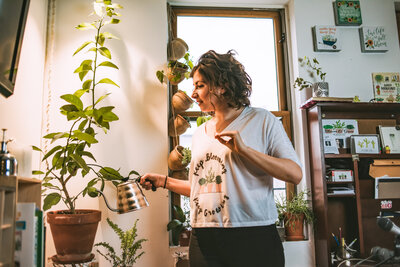

Biophilic Design Explained: Boost Mental Health With Nature At Home with Oliver Heath, Ep 341

Don't forget to subscribe to the podcast,
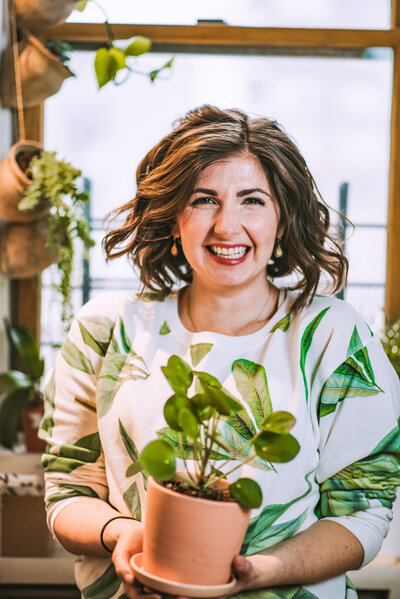
Does this design decision bring me closer to nature? When I started renovating our new home a few months ago, I wasn’t going to make a single design choice without asking this question. This lens is called biophilic design, and I actually had an episode about it before! But to talk about it more, I’ve invited Oliver Heath, an architect, designer, and thought leader in biophilic design. Oliver is based in England, studied at the Bartlett School of Architecture, runs his own biophilic design consultancy, and has spent decades translating this science from large-scale commercial buildings into something the rest of us can actually use. He also wrote a book called Design a Healthy Home. Let's dive in!
In this episode, we learn:
- [02:46] How did Oliver discover biophilic design?
- [05:30] Is biophilic design taught in architecture school?
- [07:34] How Oliver’s consulting firm applies nature to large commercial spaces
- [10:05] Why happy people are more productive
- [11:47] How biophilic design is trickling down to residential housing and communities
- [13:52] What is the true definition of biophilic design?
- [15:10] Invest in safe, organic premium gardening products for your indoor plants with Espoma Organic!
- [17:31] Using biophilic design to deal with our “always on” urban environments
- [19:09] How nature affects property values, crime rates, and education
- [20:39] Why do hospital patients with a view of trees recover 10% faster?
- [24:41] The three key elements of biophilic design (direct, indirect, and spatial connection)
- [27:04] Why understanding our senses and neurodiversity is the true foundation of designing a space
- [29:41] How to approach indoor airflow, fresh air, and scent
- [31:32] Moving beyond technical checklists to the sensory quality of a building
- [32:31] How to make your home more biophilic
- [34:31] Tips for managing artificial light and circadian rhythms at home
- [40:00] How to pick colors based on positive nature experiences? (Ecological Valence Theory)
- [44:02] Incorporating ‘haptic invitations’ and natural materials into your spaces
- [45:34] How an autistic school in London used biophilic niches to create a safe sensory environment
- [48:22] How to safely incorporate the sound and feel of water indoors
- [51:55] Check out Oliver’s book ‘Design a Healthy Home’
- [53:45] Check out Oliver’s online course!
- [55:36] Oliver’s favorite biophilic features in his own home
- [57:08] Where to find Oliver, his book, and the Biophilic Design School!
Order my book!
Growing Joy: The Plant Lover's Guide to Cultivating Happiness (and Plants) by Maria Failla, Illustrated by Samantha Leung
What Is Biophilic Design?
Biophilia literally means a love of nature. And biophilic design is the practice of bringing that love into the spaces where we actually spend our lives!
Oliver calls it an “evolutionary design ethos.” For hundreds of thousands of years, we evolved in nature. Our nervous systems learned to read landscapes.
The problem is we now spend our days in noisy urban spaces, which Oliver describes as an “always-on” environment. There's always noise, artificial light, and something overstimulating us.
Backed by 20 to 30 years of research from environmental psychologists, biophilia is definitely not a trend.
Biophilic Design Case Studies
Here is some research Oliver shared in our conversation:
- Hospital patients with a window view of trees recovered 8.5% faster and needed 22% less pain medication
- Students with optimized natural light learned 20% to 26% faster and scored higher on tests
- Kids in classrooms with real timber walls had heart rates averaging 1,600 beats per day lower
- Neighborhoods: A 10% increase in tree canopy = a 15% drop in violent crime
The 3 Core Elements of Biophilic Design
- Direct connection to nature
It involves bringing “real sensory forms” of the outdoors inside. Natural light, fresh air, plants, water, etc. Oliver calls it the most powerful multi-sensory experience (allows us to feel the changes that happen over time) you can create in a space.
- Indirect connection to nature
If you can't see trees from your apartment, this is your workaround. You can use natural materials, colors, and textures to mimic and evoke a feeling of nature.
- Human spatial response
This one’s about how spaces make your body feel. Oliver calls it prospect and refuge, the balance between open spaces and cozy ones. Why does a window seat feel so good? That's this.
Easy Ways to Create a Biophilic Home Environment
The simplest change I ever made was moving my desk right next to a window. I did not realize how much those lux levels were affecting my productivity until I actually had some sun on my face.
Oliver calls natural light the “supercharging of any space.”
Some of the easiest ways to do it:
- Natural light first: Move furniture away from windows and avoid heavy curtains or drapes!
- Circadian lighting: Bright/cool during the day to help you focus; warm/dim at night to help you sleep.
- Color palette: Oliver talks about the ecological valence theory. Basically, greens, blues, and earth tones feel safe because we evolved reading those colors that way.
- Natural materials: Wood, cork, stone, linen, terracotta. He calls these haptic invitations. They just feel right because they signal “nature” to your brain
- Sound: Like birdsong, rainfall, moving water.
Pick one room. Start there. You don't need to redo everything to feel a real difference.
Biophilic Living
I am finally moving into my renovated home next week. And I cannot wait to see how these biophilic changes affect my mood and sleep, especially with my new red-light-friendly bulbs.
This is a reminder that we should not just design to support human life but all life.
If you want to learn more, check out Oliver’s book, Design A Healthy Home. It has 100 ways to make your space feel better. He also has a course called Oliver Heath Design School!
You can also follow him on Instagram as he is about to post a photo of his wisteria in full bloom. Check it out!
Mentioned in our conversation:
- Design A Healthy Home by Oliver Heath
- Oliver Heath Design School
- The Hackney Garden School Project
- International WELL Building Institute
- Seattle Spheres
- Lumie® | Wake-Up Light Alarm Clocks for Better Sleep + Waking
Thank you to our episode sponsor:
Espoma Organic
Fill your biophilic indoor space with harsh-chemical-free plants! Espoma Organic is dedicated to making safe indoor and outdoor gardening products for people, pets, and the planet. They have an amazing variety of high-quality, organic potting mixes, garden soil, fertilizers, and pest control products that are organic and eco-friendly. To top it all off, they have a huge sustainability commitment with a 100% solar-powered plant, zero-waste manufacturing, and eco-friendly packaging.
Visit espoma.com to find your local Espoma dealer or check my Amazon storefront.
Follow Oliver:
Website
Instagram
LinkedIn
Follow Maria and Growing Joy:
Order my book: Growing Joy: The Plant Lover's Guide to Cultivating Happiness (and Plants) by Maria Failla, Illustrated by Samantha Leung
Take the Plant Parent Personality Quiz (Get the perfect plants, projects and educational resources for YOUR Lifestyle)
Support Growing Joy with Maria by becoming a Plant Friend on Patreon!
Instagram: @growingjoywithmaria
Tiktok: @growingjoywithmaria
Subscribe to the Growing Joy YouTube channel! /growingjoywithmaria
Website: www.growingjoywithmaria.com
Pinterest: @growingjoywithmaria

Leave a Reply
You must be logged in to post a comment.