

advanced plant care, Gardening, General Plant Care Guides, indoor plants, plant care, plant science, Planty People, soil
Can Water Quality Affect Your Plants? with Cydian Kauffman, Ep 324
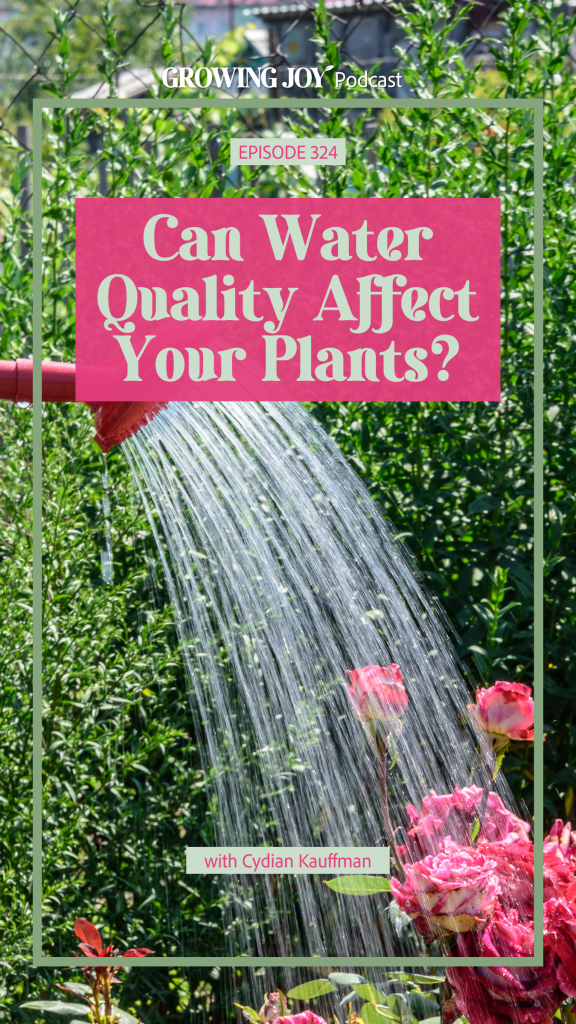
Podcast promo asset
Water quality is not something most plant parents think about when caring for their plants. We usually focus on light, soil, and watering schedules, but rarely question if the actual water coming out of our tap could be affecting us and plant health! Good thing, though, that water quality expert Cydian Kauffman, CEO and owner of Pure Water NorthWest, reached out to me to explain how water quality affects plants and how things like chlorine, minerals, and salts can make an impact on both houseplants and gardens. After living with New York City tap water, well water in upstate New York, and now tap water in Florida, I started noticing the same plants reacting very differently in each place, so this conversation helped connect the dots! Let's get into it!
In this episode, we learn:
- [03:19] How did Cydian Kauffman become the water quality expert?
- [04:29] EPA’s Legal water limits vs. healthy water (and how labs often blur the two)
- [05:14] Why eczema, dry skin, and brittle hair can start with your tap water
- [07:39] How does water get “messed up”?
- [07:55] What’s the hydrologic cycle?
- [08:21] Microplastics, pharmaceuticals, and “forever chemicals” in everyday water
- [09:27] What’s the standard practice for tap water treatment across United States?
- [10:14] Why almost all municipal water uses chlorine (and what carbon filters really do)
- [11:53] Hard vs soft water
- [12:30] Why water that is too soft can damage pipes and plants
- [13:22] What’s the ideal hardness/softness of water?
- [13:52] Why buying a random water softener can make water quality worse
- [14:23] pH and alkaline
- [15:15] Set your seedlings up for success with Espoma Organic’s premium products!
- [16:58] Learn permaculture, regenerative gardening, and more with Brandy Hall’s book, The Complete Guide to Home Permaculture
- [20:39] What are the three biggest water issues affecting skin, appliances, and health?
- [22:05] Forever chemicals explained (and why parts per trillion matter)
- [23:24] Why water quality is regional
- [25:52] What is reverse osmosis and how does it work?
- [27:32] Why salts/sodium in tap water can lead to leaf burn and root stress
- [30:27] How Manukora honey supports your daily wellness routines!
- [31:15] How salts cause leaf burn through osmotic pressure
- [32:24] What’s that white residue on leaves?
- [33:24] Does letting tap water sit overnight really help your plants? (free chlorine)
- [35:00] How to find what’s in your city’s water
- [37:05] Other ways to fix water quality issues (carbon filters, softeners, reverse osmosis)
- [39:35] Why hose and sprinkler filters rarely work for outdoor plants
- [40:36] What does structured water or “water coherence” mean?
- [42:46] Where to find Cydian online + how he water consults remotely
- [43:43] Real-world water success stories that changed lives
Order my book!
Growing Joy: The Plant Lover's Guide to Cultivating Happiness (and Plants) by Maria Failla, Illustrated by Samantha Leung
Don't forget to subscribe to the podcast,
so you don't miss the amazing episodes we have coming up!
What's Actually in Your Tap Water?
Cydian explained the hydrologic cycle. Basically, as rain comes out of the clouds, it's already picking up the things that are floating in the air.
These could be animal waste, forever chemicals, and tons of microplastics. Or elements like arsenic, radium, and uranium.
Luckily, water treatment does a very good job of getting out most of that, but not all of it! That's why in your home, even if you're on a well or you're getting water from the city, you could still have contaminants that look invisible, smell fine, and taste normal.
How Cities Treat Water Differently
Each city treats their water differently. There's a standard workup, but they customize it based on the water source.
Most water treatment facilities are going to:
- Flocculate (pour in chemicals that bind stuff together)
- Chlorinate (99% of municipalities do this)
- Run it through carbon filtration
Cydian said that a single gram of carbon has so many tiny tunnels inside of it that if you were to spread that carbon out, it would cover three tennis courts. That's how much surface area is inside a piece of carbon.
But carbon doesn't do everything. It's perfect for getting rid of chlorine, but it doesn't remove hardness or certain metals.
Hard Water vs. Soft Water for Plants
So what is the difference between hard water versus soft water? It's basically rocks.
When water is hard, it has more rock particles in it. Hard water has literal calcium and magnesium that are dissolved in the water.
Hardness in water is not unhealthy to drink, but it’s going to affect your skin and hair based on your sensitivity. Most municipalities try for a hardness level of two.
But here's where it gets tricky. If the water gets too soft, it can get corrosive. It can become hungry for metals. So if you just go to Home Depot and buy a softener without testing your water first, you may be making your water strip metals from your plumbing that you then drink.
Does Chlorine Hurt Your Plants?
Yes, chlorine can affect plants. But there's more to the story.
Plants are much more susceptible to chlorine than humans are. Some plants are more sensitive than others, like:
- Orchid-type plants
- Carnivorous plants
But most common houseplants can handle tap water just fine.
Salt and sodium buildup from chlorinated water can cause leaf burn and root damage. The chlorine disrupts the osmotic pressure that plants use to pull water into their roots. When there's too much salt or chlorine, it can actually dry out the leaves.
How to Test Your Water Quality
So how do you find out what's actually in your water?
Free options:
- Check your municipality's CCR (community conveyance record)
- Visit the Environmental Working Group's tap water database
- Search for your city's water report online
Paid option:
- Order a full-spectrum home water test kit
- Companies will mail you a box
- Fill it following instructions, mail it back
- Get a detailed report in a few weeks
The free reports are generalized for your area. If you want your specific plumbing tested, you need to pay for a kit. But based on those results, you can decide if you need treatment.
Reverse Osmosis: The Best Solution for Drinking Water
For drinking water, reverse osmosis is the answer. Cydian was very clear about this.
Reverse osmosis will remove:
- PFAS (forever chemicals)
- Microplastics
- Arsenic
- 90 to 99.999% of contaminants
It's basically a filter that uses pressure to push contaminants through to one side while leaving clean water on the other. The waste gets dumped down a drain, and you have good water to drink.
You can do reverse osmosis for your whole house, but that's usually overkill. It's best to just put it on your sink with a dedicated faucet. Get the one with the tank, not the tankless versions.
Your Water Quality is Regional
Your water is unique to where you live. What works in New York City won't be the same as what you need in Florida or the Pacific Northwest.
Test your water, understand what's in it, and then make informed decisions about treatment based on your specific situation and your specific plants.
And remember, most plants can handle tap water just fine. But if you're growing sensitive plants like orchids or carnivorous plants, or if you're noticing issues like leaf burn or white residue, it might be time to look into your water quality!
Mentioned in our conversation:
- Growing Joy Episode 317: Discover Coherent Water with Mario Brainovic of Analemma Water
- The Fourth Phase of Water: Beyond Solid, Liquid, and Vapor by Gerald Pollack
- EWG Tap Water Database
- Safe Drinking Water Act: Consumer Confidence Reports (CCR) | US EPA
Thank you to our episode sponsors:
Espoma Organic
Ensure your plants receive not only high-quality water but also top-notch gardening products. Espoma Organic is dedicated to making safe indoor and outdoor gardening products for people, pets, and the planet. They have an amazing variety of high-quality, organic potting mixes, garden soil, fertilizers, and pest control products that are organic and eco-friendly. To top it all off, they have a huge sustainability commitment with a 100% solar-powered plant, zero-waste manufacturing, and eco-friendly packaging.
Visit espoma.com to find your local Espoma dealer or check my Amazon storefront.
Quarto: The Complete Guide to Home Permaculture by Brandy Hall
If you've ever wondered about regenerative gardening and making your garden more sustainable, The Complete Guide to Home Permaculture is the perfect way to start. This book breaks down permaculture and self-sustaining landscapes, and shows you how to design your garden as a connected system. Learn actionable steps and be guided by before-and-after photos that make the processes more approachable and uncomplicated. Brandy helps you through the different regenerative gardening principles to make sure you're set up for success no matter your garden location or size.
Grab The Complete Guide to Home Permaculture at quarto.com and wherever books are sold.
Manukora
Level up your coffee or even your snack pairings with single-origin manuka honey! Manukora honey is a rich, creamy honey from the remote forests of New Zealand, ethically harvested and packed with powerful nutrients. It contains triple the antioxidants and prebiotics of regular honey, supporting immunity and gut health. Versatile and delicious, it can be used in coffee, smoothies, smoothie bowls, or enjoyed straight from the spoon for an energy boost.
Go to manukora.com/bloom to get up to 31% off the starter kit that includes their 850+ Manukora honey jar, 5 honey travel sticks, a wooden spoon, and a guidebook, PLUS $25 worth of free gifts!
Follow Cydian:
Website
Instagram
TikTok
Facebook
LinkedIn
Follow Maria and Growing Joy:
Order my book: Growing Joy: The Plant Lover's Guide to Cultivating Happiness (and Plants) by Maria Failla, Illustrated by Samantha Leung
Take the Plant Parent Personality Quiz (Get the perfect plants, projects and educational resources for YOUR Lifestyle)
Support Bloom and Grow Radio by becoming a Plant Friend on Patreon!
Instagram: @growingjoywithmaria
Tiktok: @growingjoywithmaria
Subscribe to the Growing Joy Youtube channel! /growingjoywithmaria
Website: www.growingjoywithmaria.com
Pinterest: @growingjoywithmaria

Leave a Reply
You must be logged in to post a comment.