




Gardening, advanced plant care, Garden to Table, General, General Plant Care Guides, plant care, plant science, plantfriendsIRL, Plants and Wellness, podcast
How to Preserve Food From Your Garden with Staci and Jeremy Hill, Ep 319
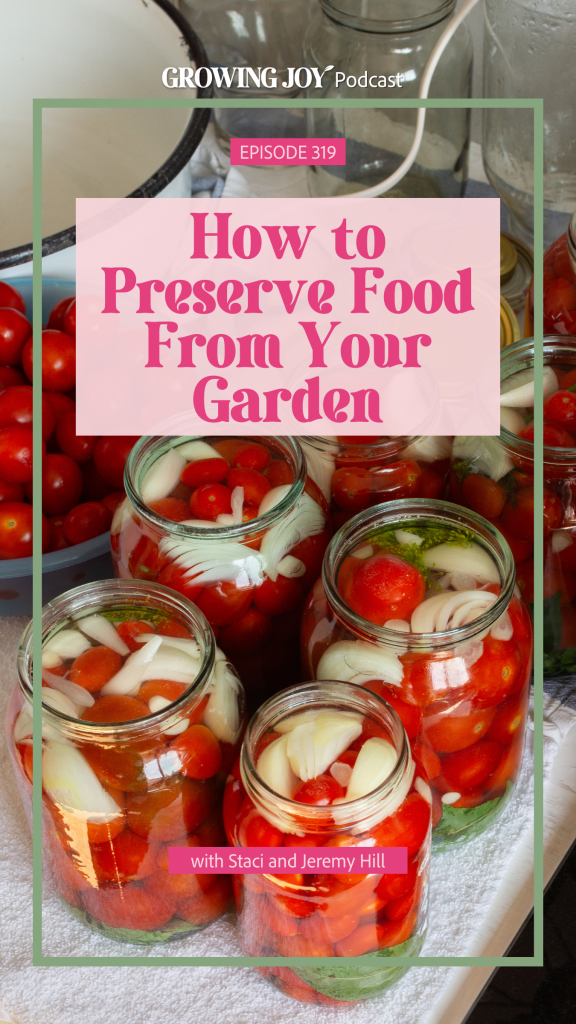
Who wouldn't want to spend less on groceries? That’s not a fantasy for homesteaders Staci and Jeremy Hill, the husband and wife duo behind Gooseberry Bridge Farm and authors of The Preserver’s Garden. They’ve figured out how to feed their family of 8, pretty much year-round, from food they grow and preserve themselves. And yes, they actually do this. And after sitting down with them, I learned that their lifestyle isn’t about perfection or self-sufficiency but is about smart systems, experimentation, and doing a little more each year. Here’s how you can start building your own “preserver’s garden,” even if you’re just growing a few plants on a patio. Let's get right to it!
In this episode, we learn:
- [02:02] Meet Jeremy & Staci Hill from Gooseberry Bridge Farm!
- [03:09] Why food quality pushed them deeper into homesteading
- [04:15] When did they start getting into preserving their garden harvests?
- [04:54] What it means to be a “you-pick flower farm”
- [05:13] A peek at their 12-acre property and flower fields
- [06:50] How much do they actually grocery shop vs how much do they grow on their own?
- [09:02] Regular garden vs a preserver’s garden
- [10:22] How they calculate yearly needs: experimentation + family habits
- [12:05] How cooking every meal changes your relationship to food and waste
- [14:54] Grow the best quality food for preserving by relying on Espoma Organic’s premium quality products.
- [16:35] Learn to choose, grow, and preserve plant varieties for your pantry with Vibrant Harvest by Sandra Mao.
- [17:59] What are the other benefits of homesteading/preserving?
- [20:06] Things you need to consider with homesteading
- [23:27] How to preserve okra (and why it’s in almost every winter meal)
- [24:29] Should you focus on preserving one crop many ways, or many crops one way?
- [26:41] Freeze-drying vs canning
- [28:57] Preservation method: Salting
- [29:43] Fermenting & pickling (kimchi, sauerkraut, and probiotic pickles)
- [32:23] Modern tools that make preserving easier
- [33:18] Preservation method: Canning
- [35:34] Preservation method: Dehydrating
- [37:16] What's their favorite produce to preserve?
- [37:53] Do certain varieties preserve better? (tomatoes, potatoes, onions, etc.)
- [41:58] DIY root cellar: the “extra fridge turned to 50°F” trick
- [43:05] Where to find Jeremy & Staci, their book, and their farm online
Order my book!
Growing Joy: The Plant Lover's Guide to Cultivating Happiness (and Plants) by Maria Failla, Illustrated by Samantha Leung
Don't forget to subscribe to the podcast,
so you don't miss the amazing episodes we have coming up!
What is a Preserver's Garden?
Before this conversation, I honestly hadn’t thought much about the difference between “a garden” and “a preserver’s garden.” I’ve always grown what I love and dealt with the harvest when it hits.
But Staci and Jeremy’s family do the opposite. They decide what they want to eat all year… then plant based on that.
For example, Staci said they could plant 30 tomato plants and probably get enough for their sauces and salsas for the year, but only if every plant behaved perfectly. And we all know that doesn’t happen. So rather than trying to babysit each tomato plant, they plant around 100. That way, no stress. Whatever grows becomes sauce, and they always end up with enough.
How Much a Self-Sufficient Garden Really Replaces at the Grocery Store
Do they still go to the grocery store if they are surrounded by almost everything they need? Yes, they do but not in the traditional weekly way. They buy grains, coffee, and convenience foods here and there to supplement what they have.
They buy apples from another farm because their trees died. But they barely touch the produce section. Or when they do buy something, they buy huge quantities, like 50 pounds of potatoes at a time.
Also, they almost never eat out! Not out of some strict rule, but just because home feels better and easier now. I completely related because when we moved to the Catskills and discovered literally no restaurants delivered to our house, it changed our lifestyle. Suddenly, we were cooking everything at home, composting, and paying attention to food waste.
Benefits of Preserving Your Own Food (Beyond Saving Money)
There are the obvious benefits, like saving money and having higher-quality food. Jeremy explained that most people appreciate their food because they pay for it with money.
But when you grow it and preserve it yourself, you pay for it with time, sweat, and hours in the garden, and that changes the value completely. You don’t throw out half a plate of homegrown food.
And their kids are growing up with a completely different relationship to food. When their son wanted cereal, he made granola from scratch. Like, just casually. Because that’s normal for them. I found that incredibly charming.
How to Start Preserving Food: The Simplest Beginner Approach
Where do you even start?
Staci said to pick the thing you already grow too much of and learn how to preserve that one thing. No need to learn canning, fermenting, or freeze drying all at once. Just pick one crop and one method.
For a lot of beginners, that crop is beans. Beans are easy; they produce a ton at once, and you can just blanch and freeze them.
It’s also comforting to hear that Jeremy and Staci didn’t start with every method either. Over time, they just tried new things (canning, dehydrating, pickling, fermenting) and eventually freeze drying, which they absolutely rave about.
Food Preservation Methods to Learn (From Their Book)
Here’s the quick version of some of the methods they walk through in the book:
- Salting: Mostly historically used for meats but can also be used for veggies (but the couple said it’s not very appealing)
- Pickling: Easy, fun, hard to mess up. Great for cucumbers.
- Fermenting: Sauerkraut, kimchi. Honestly delicious and good for you.
- Water-bath canning: Applesauce, jams, tomatoes. Great for beginners.
- Pressure canning: For low-acid veggies.
- Freezing: The simplest and still great.
- Dehydrating: Herbs, fruits, even fruit leather.
- Freeze drying: Their holy grail. Foods bounce back and last forever.
How This Changed the Way I’m Thinking About My Own Garden
After the conversation, I started thinking about what I buy constantly at the grocery store. For us, it’s potatoes, onions, and garlic. But I don’t grow those myself all the time. So it inspired me, even if I don’t have acres.
And that’s the spirit of their message. You don’t need a homestead, and you don’t need a freeze dryer. You just start where you are and learn a little more each year.
Mentioned in our conversation:
- The Preserver's Garden: How to Grow a Garden for Fermenting, Canning, Pickling, Dehydrating, Freeze Drying, and More by Staci and Jeremy Hill
- Growing Joy 202: How to Can and Ferment Vegetables and Fruits from Your Garden with Stephanie Thurow
- Growing Joy 195: Homesteading for Beginners with Michelle Bruhn and Stephanie Thurow
- Gooseberry Bridge 2026 Farm Memberships
- Gooseberry Bridge You-Pick Flowers
Thank you to our episode sponsors:
Espoma Organic
As we approach winter, make sure your plants are ready for the dormant season! Check their soil and repot and fertilize if needed with organic gardening products. Espoma Organic is dedicated to making safe indoor and outdoor gardening products for people, pets, and the planet. They have an amazing variety of high-quality, organic potting mixes, garden soil, fertilizers, and pest control products that are organic and eco-friendly. To top it all off, they have a huge sustainability commitment with a 100% solar-powered plant, zero waste manufacturing, and eco-friendly packaging.
Visit espoma.com to find your local Espoma dealer or check my Amazon storefront.
Quarto: Vibrant Harvest by Sandra Mao
What if you grew a feast of rainbows in your garden? Think purple tomatoes, yellow carrots, magenta potatoes, speckled lettuce, and so much more. Sandra Mao's latest book, Vibrant Harvest: Cultivating a Kaleidoscope of Colors in Your Vegetable Garden with Heirlooms, Modern Hybrids, and More, will teach you the step-by-step process of growing unique and colorful varieties of your favorite vegetables. You will learn how to choose and grow plants like heirloom varieties, eclectic hybrids, and even ancestral varieties!
Grab Vibrant Harvest at quarto.com and wherever books are sold.
Follow Staci & Jeremy:
Website
Instagram
YouTube
Facebook
Follow Maria and Growing Joy:
Order my book: Growing Joy: The Plant Lover's Guide to Cultivating Happiness (and Plants) by Maria Failla, Illustrated by Samantha Leung
Join the Bloom and Grow Garden Party Community Platform & App AKA the plantiest and kindest corner of the internet! Get your FREE 2-week trial here!
Take the Plant Parent Personality Quiz (Get the perfect plants, projects and educational resources for YOUR Lifestyle)
Support Bloom and Grow Radio by becoming a Plant Friend on Patreon!
Instagram: @growingjoywithmaria
Tiktok: @growingjoywithmaria
Subscribe to the Growing Joy Youtube channel! /growingjoywithmaria
Website: www.growingjoywithmaria.com
Pinterest: @growingjoywithmaria

Leave a Reply
You must be logged in to post a comment.