

Nerdy Science Breakdowns, plant science, Plants and Wellness, Plantside Chats: Life Lessons Learned in the Garden, Planty People, podcast
Tending to Hope and Healing in Nature with Dr Diane Dreher, Ep 325
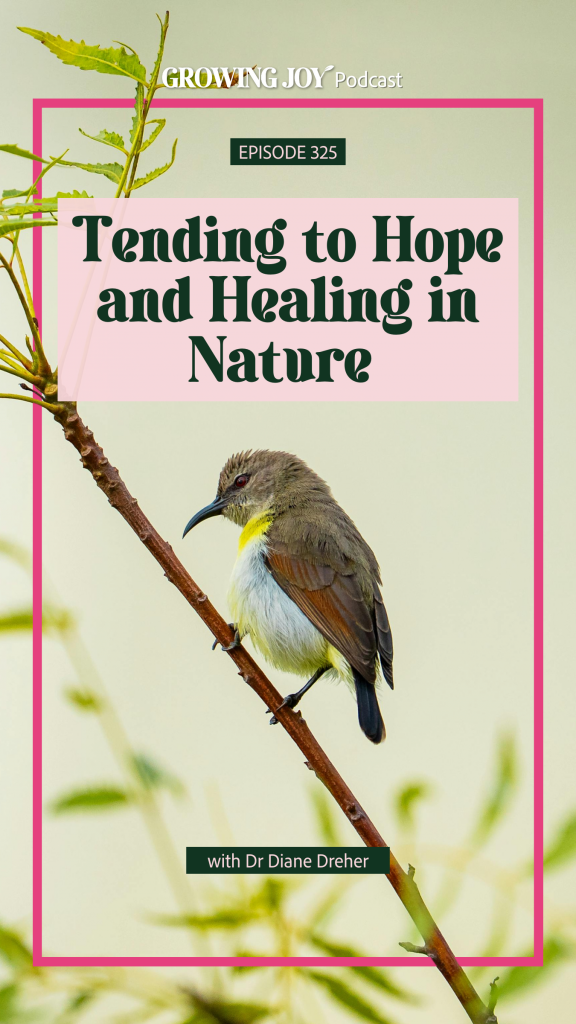
If you have been feeling overwhelmed, disconnected, or not sure where hope lives for you, healing in nature might be exactly what you need right now. In today’s conversation, I am joined by Dr. Diane Dreher, a positive psychology coach, researcher on hope, and author of Pathways to Inner Peace. Diane’s work bridges science, spirituality, and lived experience, which helps us understand why nature is not just comforting but very important to our lives. She also reminds us that tending to hope is an active practice, and nature can be the tool to achieve it. I want 2026 to be the most grounded, most creative, most peaceful, most joyful year for us, and I hope this conversation gets us one step towards it.
In this episode, we learn:
- [01:59] Join my 2026 Growing Joy live community experience!
- [03:04] Meet Dr. Diane Dreher (hope researcher, positive psychology coach, and nature scholar)
- [05:54] What’s the difference between wishing and active hope
- [07:15] How doom-scrolling quietly erodes motivation and creativity
- [08:04] Why hopelessness is really a symptom of disconnection (fight, flight, freeze)
- [09:28] The science behind nature walks and creative thinking
- [10:43] Why nature creates connection even when you’re alone
- [12:00] Healing through nature is free and still underused!
- [12:24] How ancient cultures used nature as medicine and wisdom
- [13:15] Lao Tzu, water, bamboo, and the strength of flexibility
- [14:13] How Daoist philosophy shaped modern psychology and leadership
- [14:54] What is forest bathing and its impact on inflammation and stress?
- [15:34] Grow more food with less work and have a productive vegetable garden with The Continuous Vegetable Garden by Charlie Nardozzi!
- [17:31] The hospital window study that changed how we view healing
- [18:18] Forest medicine, immunity, and cancer-fighting cells
- [19:31] How seeing ourselves as machines disconnects us from nature
- [20:30] Why Pathways to Inner Peace was written
- [20:49] How smartphones reshaped anxiety, loneliness, and attention
- [22:50] What are the habits we must actively break to reconnect with nature?
- [24:38] What’s the science behind addictive technology and intermittent reward?
- [27:42] Why joy and longevity are tied to purpose
- [27:59] How awe regulates the nervous system and expands hope
- [30:16] Why awe and hope live in the same emotional space
- [31:52] Simple ways to cultivate awe and connection daily!
- [32:04] #1 Mindful presence
- [32:47] #2 Mindful breathing
- [34:52] Why cooking with herbs is a collaboration with nature
- [36:16] The biophilia hypothesis and mirrored growth
- [37:46] Community as medicine for modern isolation
- [38:10] Meditation, compassion, and quieting the inner critic
- [39:52] Why is purpose important for health and longevity?
- [41:27] A pivotal U-turn that changed Diane’s life path
- [45:01] Growth mindset vs. fixed mindset in real life
- [45:18] Where to find Diane online
Order my book!
Growing Joy: The Plant Lover's Guide to Cultivating Happiness (and Plants) by Maria Failla, Illustrated by Samantha Leung
Don't forget to subscribe to the podcast,
so you don't miss the amazing episodes we have coming up!
Why Healing in Nature Matters When Hope Feels Distant
A lot of us are living in a constant state of stress. We doom scroll, consume bad news, and feel isolated, even when we are surrounded by people. Diane explains that when stress becomes chronic, our nervous system stays stuck in survival mode.
And healing in nature offers a way out of that cycle.
It can reduce stress and anxiety, support mental health and emotional regulation, improve creativity and clarity, and help us feel more connected and less alone.
Hope as an Active Practice, Not Something We Wait For
Diane shares that hope is not passive. It is something we practice.
She describes active hope as having three elements:
- Setting a goal
- Multiple pathways to reach that goal
- A sense of agency and motivation
This mirrors how we approach caring for plants. We don’t wish for growth. We create the conditions that allow growth to happen. In the same way, hope and healing require intention, not waiting.
How Nature Supports Mental Health and Calms the Nervous System
Nature has a measurable effect on the body and brain. Diane shares research from a Philadelphia hospital where patients recovering from surgery were given rooms with either a view of trees or a view of brick walls.
The patients who looked out at trees needed less pain medication, had fewer complications, and were discharged earlier.
Studies have found that:
- Walking in nature reduces symptoms of depression
- Natural environments lower cortisol levels
- Viewing greenery can speed physical healing
- Time outdoors helps shift the body out of fight, flight, or freeze
This is why nature-based wellness practices feel so grounding. They work with our biology, not against it.
Awe, Attention, and Being Fully Present
Awe is that feeling of being part of something larger than ourselves. It's what we feel looking at a sunset or walking through a forest.
Awe opens us up to embrace our dreams and believe there's more out there than what we're currently experiencing. And when we feel awe, all that inner critic noise just disappears.
Where attention goes, energy flows. Right now, our attention is being held hostage by devices, stress, and disconnection. Mindful gardening and connecting with plants give us a way to take it back.
Plants, Caretaking, and Home-Based Wellness
You don’t need a forest or a garden to experience healing in nature. Plants bring that connection into our homes.
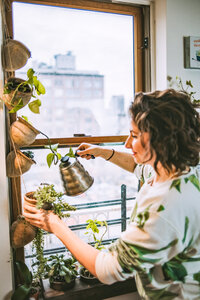
For plant parents, caring for plants becomes a form of home-based wellness. Diane keeps philodendrons in her bathroom near the shower because they love humidity. So every time a new leaf grows, it makes her happy.
Simple Ways to Tend Hope Through Nature Every Day
Tending hope does not require big changes. It begins with small, repeatable practices.
Some gentle ways to begin:
- Take a short walk outside without your phone
- Sit near a window and notice the trees or sky
- Care for a plant with intention and attention
- Take three slow breaths when you feel overwhelmed
- Notice new growth, indoors or outdoors
These moments are not just for your plants but for yourself as well.
Tending to Hope Is a Practice
Hope isn't something we wait for. Wellness isn't something we buy. Healing in nature isn't a luxury. It's a birthright. We are nature. When we forget that, we feel isolated. When we remember it, everything shifts.
Again, I want 2026 to be the most grounded, most peaceful year for all of us. And I believe it starts with remembering we're living beings who grow when we're connected to other living beings. Our plants need us. We need our plants.
Mentioned in our conversation:
- Inner Gardening: A Seasonal Path to Inner Peace by Diane Dreher
- Pathways to Inner Peace by Diane Dreher
- Awe: The New Science of Everyday Wonder and How It Can Transform Your Life by Dacher Keltner
- Forest Bathing: How Trees Can Help You Find Health and Happiness by Dr. Qing Li
- Growing Joy Episode 322: From Plant Care to Nature Therapy: A Solo Heart to Heart
- Join my 2026 Growing Joy live community experience
Thank you to our episode sponsor:
Quarto: The Continuous Vegetable Garden by Charlie Nardozzi
What if you could have a productive vegetable garden all year round? You won't need to buy transplants, start seeds, or even do yearly planting with Charlie Nardozzi's The Continuous Vegetable Gardenas your guide. This book will teach you how to design a garden that works for itself, relies on dependable perennials, and keeps producing season after season, all while staying low-maintenance! Wherever you're gardening, Charlie teaches you how to prepare your soil, save your seeds, and do less work without compromising your harvest.
Grab The Continuous Vegetable Garden at quarto.com and wherever books are sold.
Follow Diane:
Website
Facebook
LinkedIn
Bsky
Books
Meditations
Follow Maria and Growing Joy:
Order my book: Growing Joy: The Plant Lover's Guide to Cultivating Happiness (and Plants) by Maria Failla, Illustrated by Samantha Leung
Join the Bloom and Grow Garden Party Community Platform & App AKA the plantiest and kindest corner of the internet! Get your FREE 2-week trial here!
Take the Plant Parent Personality Quiz (Get the perfect plants, projects and educational resources for YOUR Lifestyle)
Support Bloom and Grow Radio by becoming a Plant Friend on Patreon!
Instagram: @growingjoywithmaria
Tiktok: @growingjoywithmaria
Subscribe to the Growing Joy Youtube channel! /growingjoywithmaria
Website: www.growingjoywithmaria.com
Pinterest: @growingjoywithmaria

Leave a Reply
You must be logged in to post a comment.