




Lifestyle, plant science, Plants and Wellness, Plantside Chats: Life Lessons Learned in the Garden, Planty People
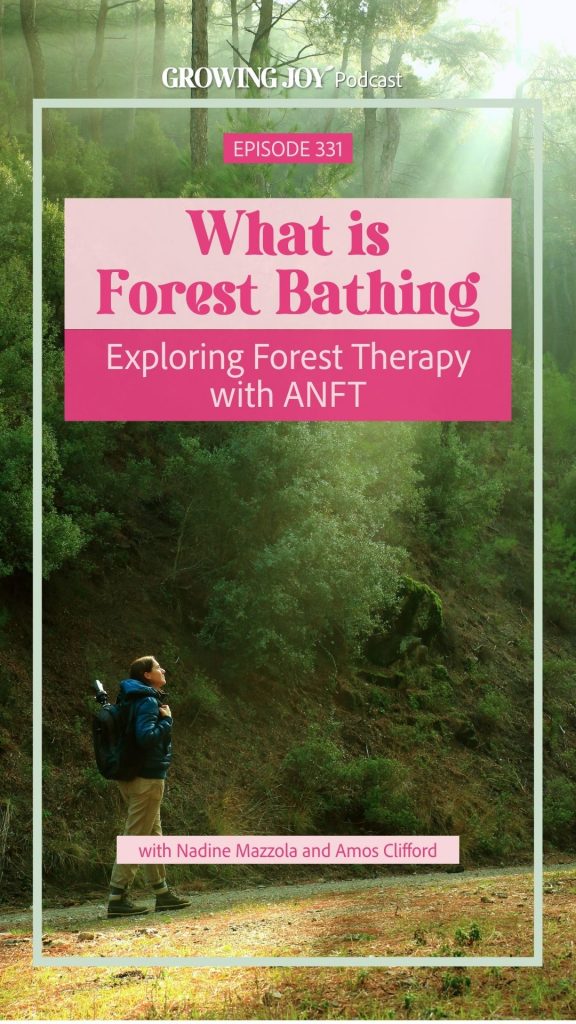
What is Forest Bathing: Exploring Forest Therapy with ANFT, Ep 331
Don't forget to subscribe to the podcast,
I'm getting certified as a forest therapy guide with the Association of Nature and Forest Therapy (ANFT)! Every single time, though, people’s response is the same. “Oh my God, that sounds so cool. But what is that?” I get that the words “forest therapy” or “forest bathing” sound vague. Some think it’s like hiking or yoga in the woods, but many can be mistaken.
I spent years focused almost entirely on houseplants. But the deeper I got into plant care, the more I started to see the bigger picture. Plants aren't just decoration, and nature isn't just a backdrop. There's something real happening when we slow down and actually be in it. So I invited Amos Clifford, the founder of ANFT, and the top forest therapy guide and trainer, Nadine Mazzola, to talk about what this practice really is!
In this episode, we learn:
- [01:54] Why forest therapy feels so accessible and meaningful to me!
- [03:05] What is forest bathing?
- [06:32] How did Nadine become a forest therapy guide?
- [08:26] The story behind how ANFT was founded!
- [12:07] How forest therapy slowly gained traction
- [13:13] Why forest bathing is gaining cultural relevance
- [14:21] Why storytelling and sharing experiences are a core part of forest therapy walks
- [15:16] Make self-sufficiency and homesteading doable and not overwhelming with The Productive Garden!
- [16:37] How everyone carries stories about nature
- [17:18] What actually happens during a forest therapy walk?
- [21:03] Why participants often experience anxiety at the beginning of forest therapy
- [22:01] How forest bathing helps regulate the nervous system
- [23:54] A participant's amazing life change after the walk!
- [25:40] My first forest bathing experience and the challenge of slowing down
- [26:57] Why having a forest guide matters
- [30:08] Shorter recurring forest therapy sessions vs. traditional three-hour walks
- [32:00] What’s the science behind forest bathing?
- [32:42] Amos on the global boom in forest therapy research
- [35:19] Chronic stress and “salaryman” overwork in Japan
- [38:59] How forest therapy differs from other wellness practices
- [41:32] How forest bathing practices differ between Japan, Korea, and the Western world
- [44:55] Why ANFT guiding focuses on sensory invitations
- [48:32] Inside the rigorous forest therapy guide training!
- [53:05] The relational philosophy of forest therapy
- [55:54] Why is all medicine relational?
- [59:05] How forest therapy addresses our disconnection from the world
- [1:00:24] Belonging, transformation, and why humans need relational connection with the natural world
- [1:03:16] Where to find Nadine’s work and her book Forest Bathing With Your Dog
- [1:04:18] What is Amos’s next chapter for ANFT and forest therapy?
- [01:10:02] Where to find Amos' work, the ANFT global guide map, and Forest Bathing Finder
- [01:12:50] How my upcoming digital forest therapy sessions will work!
Order my book!
Growing Joy: The Plant Lover's Guide to Cultivating Happiness (and Plants) by Maria Failla, Illustrated by Samantha Leung
What Is Forest Bathing?
It’s not swimming, a spa treatment, or a hike. The term actually comes from the Japanese practice Shinrin-yoku, which translates to “taking in the atmosphere of the forest.”
Amos describes it as going into a forest or natural area and enjoying the sensory experience of being there.
Difference Between Forest Bathing and Just Going Outside
The short answer is presence and intention. A hike has a destination. A forest bathing walk has none. You're not there to exercise or to identify every bird.
You're there just to notice what it feels like to be there.
Nadine describes it as the difference between doing something alone versus having a space held for you. A guide isn't leading you to a trailhead nor holding the container so you can actually drop in.
Note: Forest bathing can happen in a city park, at the beach, in your backyard, and not just in a dense forest. The place matters less than the pace.
What Actually Happens on a Forest Bathing Walk
My first forest bathing walk was one of the most uncomfortable experiences of my week. I had so much anxiety, and I kept thinking of everything else I should be doing with three hours of my life. It’s completely normal, though, and is actually kind of the point.
A standard ANFT forest bathing walk runs for about two to three hours. It follows what's called the standard sequence, a series of sensory invitations that guide you deeper into presence, one layer at a time.
Here's how it flows:
- Pleasures of Presence: the opening invitation, about 15 minutes of connecting with your senses one at a time
- What's in Motion: a slow walk, usually 15 to 20 minutes, where your only job is to notice movement around you
- Deeper invitations: sensory and reflective prompts that shift as the walk progresses
- Council of Sharing: after each invitation, the group gathers and the guide asks one simple question: “What are you noticing?”
That last part matters more than it sounds. The stories that come out in those circles… are something else. Some have cried during the first 15 minutes.
And if three hours feels like too much to start, Nadine said she’s been running one-hour walks once a week for four weeks and sees the same depth of experience.
The Science Behind Why Forest Bathing Actually Works
I'm a plant person, and I believe in the magic of nature. But I also love when the science backs it up.
The research started in Japan, driven by the crisis of salary men who unfortunately faces the consequences of overworking that affects their health. The government needed answers, and that’s how they started the research.
The big breakthrough came from identifying phytoncides, natural chemicals emitted by trees during certain seasons. When you breathe them in, measurable changes happen in your body.
The research consistently shows:
- Stress hormones drop
- Blood pressure lowers
- NK (natural killer) cells increase
- Mood improves
- Creativity increases
- Nervous system shifts from sympathetic (fight or flight) to parasympathetic (rest and digest)
The nervous system research is still growing, and new studies are coming out constantly.
Forest Bathing is About Remembering Who You Are
Amos talks about a woman who left her marriage, quit her job, and moved to a new city after one walk in the woods.
Now, forest bathing didn’t make her do any of those things. She was already on the verge, and what the walk did was only reconnect her to what actually mattered to her.
Amos calls it “remembering who you are.”
Try a Guided Forest Therapy Experience!
If you want to try a guided experience, which both Amos and Nadine strongly recommend, especially for your first few walks, ANFT has a global directory of certified guides at anft.earth. You can search by location and find someone near you.
Here's what to look for when choosing a walk:
- A certified ANFT guide: they're trained in the standard sequence and know how to hold the container
- A walk of at least one hour: shorter is fine to start, but give yourself enough time to actually settle in
- No agenda: if it sounds like a nature hike with some mindfulness sprinkled in, keep looking
- Small groups: the sharing circles work best when everyone has space to speak
If you’re not ready for a group, some guides offer private walks. Nadine and Amos both do. A private walk is a completely different experience and worth it if you're nervous about going with strangers.
Mentioned in our conversation:
- Forest Bathing: How Trees Can Help You Find Health and Happiness by Dr. Qing Li
- Forest Bathing with Your Dog by Nadine Mazzola
- Your Guide to Forest Bathing: Experience the Healing Power of Nature by Amos Clifford
- Guide Directory – Association of Nature and Forest Therapy (ANFT)
- Forest Bathing Finder
Thank you to our episode sponsor:
Quarto: The Productive Garden by Stephanie Hafferty
Have you ever daydreamed about being self-sufficient but also worried about it being a full-time job? The Productive Garden by Stephanie Hafferty solves this by guiding you through homesteading and self-sufficient practices that are practical and possible. You will learn how to plan a self-sufficient plot, improve your soil naturally, compost effectively, grow abundant crops year-round, and much more. Not only that, Stephanie also shows you how to use your harvest in making chemical-free cleaners, herbal body care, and even garden crafts!
Grab The Productive Garden at quarto.com and wherever books are sold.
Follow Nadine:
Website
Instagram
Facebook
YouTube
Follow Amos:
Website
Instagram
Facebook
LinkedIn
X
Follow Maria and Growing Joy:
Order my book: Growing Joy: The Plant Lover's Guide to Cultivating Happiness (and Plants) by Maria Failla, Illustrated by Samantha Leung
Take the Plant Parent Personality Quiz (Get the perfect plants, projects and educational resources for YOUR Lifestyle)
Support Growing Joy with Maria Radio by becoming a Plant Friend on Patreon!
Instagram: @growingjoywithmaria
Tiktok: @growingjoywithmaria
Subscribe to the Growing Joy YouTube channel! /growingjoywithmaria
Website: www.growingjoywithmaria.com
Pinterest: @growingjoywithmaria

Leave a Reply
You must be logged in to post a comment.