



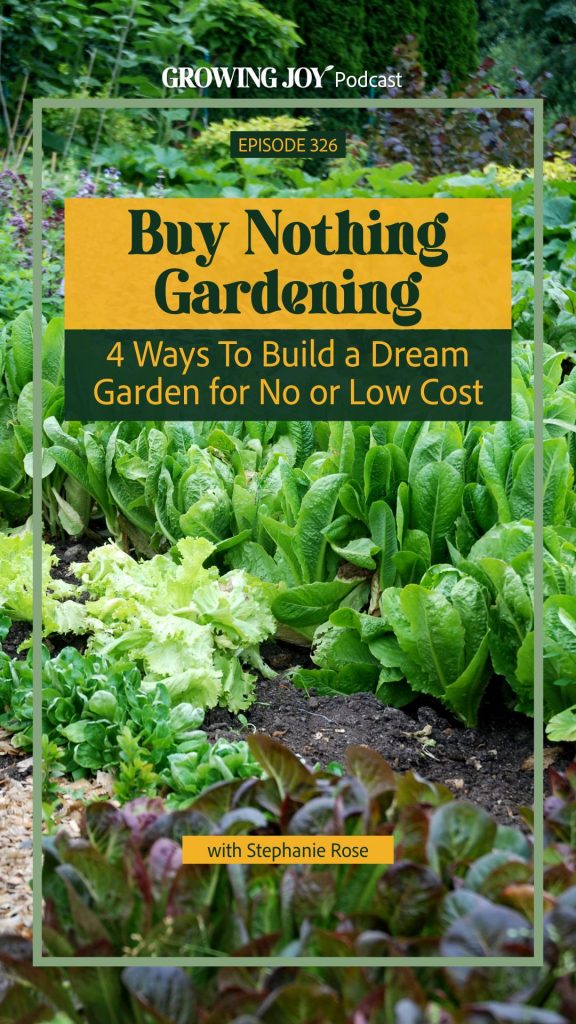
Buy Nothing Garden: 4 Ways To Build a Dream Garden for No or Low Cost with Stephanie Rose, Ep 326
Gardening feels expensive. And if you’re a plant lover or a plant parent, you’ve probably felt this at some point. It feels like you need all the things before you even start. And honestly, that belief stops a lot of people from growing plants at all. Good thing, though, is that I have my dear plant friend with me, expert gardener and author Stephanie Rose! We talked about her book, The Wild and Free Garden, which tells you all about building a garden on a budget. We're talking free gardening resources, buy nothing gardening, low-cost garden ideas, and how to tap into your community for free plants and supplies. For plant parents who care about holistic plant care, home-based wellness, and building a life that actually feels good, this way of gardening matters A LOT. Let's get started!
In this episode, we learn:
- [01:50] Join my Growing Joy in 2026 masterclass!
- [03:01] Meet Stephanie Rose!
- [04:05] How she started her love for gardening
- [08:37] Why do many people misunderstand the accessibility of gardening?
- [11:00] What does “wild and free gardening” mean?
- [12:15] Finding patio pavers on Craigslist and building a garden backward
- [13:49] How leaf color, size, and growth habits teach garden placement
- [14:47] Experience the richness of single-origin honey with 3x more antioxidants with Manukora Honey!
- [16:29] Invest in quality soil and compost to build your garden’s foundation with Espoma Organic!
- [18:20] Houseplant control vs. outdoor gardening
- [19:53] How Buy Nothing gardening is a response to waste culture
- [21:10] How simple DIY upgrades turn discarded items into lasting features
- [23:06] How personalization creates emotional attachment to spaces
- [24:33] What is the modern day sharing economy?
- [25:23] Buy Nothing community, plant swaps, and hyper-local abundance
- [26:24] How to search for free plant swaps wherever you live
- [27:24] Why sharing builds safer and more connected neighborhoods
- [29:43] Why Stephanie’s gardening book goes far beyond thrifted junk projects
- [33:28] Reclaimed greenhouses and patience as a design principle
- [34:43] How does the concept of bartering apply to gardening?
- [36:47] How bartering helped me make a lifelong friend
- [39:06] How grants can fund personal and community garden projects
- [41:40] How to search for funding for your garden!
- [43:46] Finding real-life plant communities beyond social media
- [48:10] Where to find Stephanie, her book, newsletter, and resources!
Order my book!
Growing Joy: The Plant Lover's Guide to Cultivating Happiness (and Plants) by Maria Failla, Illustrated by Samantha Leung
Don't forget to subscribe to the podcast,
so you don't miss the amazing episodes we have coming up!
The Modern Day Sharing Economy for Gardeners
Craigslist isn't quite as popular as it used to be, but the sharing economy for gardeners is more alive than ever. You just need to know where to look.
Facebook Marketplace is definitely at the top of the list. It has a specified garden/outdoor category here, and I literally could not believe my eyes when I saw many people giving away or selling plants for like $3!
There are also Buy Nothing groups online/offline. These are hyper-local community groups where people give plants away… just to give them away. Most likely to lessen their clutter. They don’t want your money, but they crave the joy of knowing that their things are going to someone who’ll appreciate them.
Stephanie also recommends NextDoor or Bunz, which are also used for trading items.
A quick Google search like “free plant swap near me” or “buy nothing group + your city” should also be the first thing you can do.
Seeds, Swaps, and Seed Libraries
I love seed libraries! My local library here in Florida actually has one.
Local gardeners contribute seeds from plants that grow in their specific growing zone, and anyone can just take them. For free, yes. Then, if you have seeds of your own, you can contribute back. It’s a beautiful cycle of sharing.
These libraries are doing SO much more than just lending books these days. My library partners with the Master Gardeners program, where once a month, a Master Gardener sets up camp and just answers questions.
They'll help you plan your garden, troubleshoot problems, whatever you need. Again, totally free.
Seed swaps are also pretty common. Garden clubs, community centers, and even plant shops host these events where you bring seeds you've saved and trade them for seeds you want to try.
Bartering Your Skills for Garden Help and Materials
Bartering in the garden is about trading your time, skills, and energy for what you need. This was also how I met a lifelong friend! Melody and I, before she passed away, spent the whole season gardening together. She came to my wedding. We became best friends, and that relationship came from a simple barter.
So think about what you have to offer to your neighbors. Can you cook? Can you make soap like Stephanie? Do you have garden knowledge to share? Can you offer labor in exchange for plants or space?
Community Garden Grants You Didn't Know Existed
Stephanie shared that people will give you money to garden.
Basically, local governments, universities, indigenous plant groups, and environmental organizations have funding set aside for community garden projects.
The only requirements are to: get at least two neighbors involved, have a plan that benefits the community, and get some signatures of support.
These grants can fund things like:
- Pollinator gardens with native plants
- Boulevard plantings
- Community gathering spaces with cut flower gardens
- Food security projects where you grow vegetables to share
Community Over Consumerism
Buy nothing gardening helps you save money, connect with your neighbors, and build something meaningful together.
When you buy a plant from someone directly instead of online, you meet a real person and learn their story. They might also throw in extra cuttings or tips you’d never get when you just simply have them delivered at your door.
That human connection is what we’re actually missing in our one-click delivery world. So try these approaches! Get out there and start building your wild and free garden.
Mentioned in our conversation:
- The Wild & Free Garden by Stephanie Rose
- Crescent Garden
- Neighbourhood Small Grants
- Nextdoor
- Bunz
- Growing Joy Episode 246: What is Regenerative Gardening and Permaculture? with Stephanie Rose of Garden Therapy
Thank you to our episode sponsors:
Manukora
Level up your coffee or even your snack pairings with single-origin manuka honey! Manukora honey is a rich, creamy honey from the remote forests of New Zealand, ethically harvested and packed with powerful nutrients. It contains triple the antioxidants and prebiotics of regular honey, supporting immunity and gut health. Versatile and delicious, it can be used in coffee, smoothies, smoothie bowls, or enjoyed straight from the spoon for an energy boost.
Go to manukora.com/bloom to get up to 31% off the starter kit that includes their 850+ Manukora honey jar, 5 honey travel sticks, a wooden spoon, and a guidebook, PLUS $25 worth of free gifts!
Espoma Organic
Build your garden's foundation with quality soil and compost! Espoma Organic is dedicated to making safe indoor and outdoor gardening products for people, pets, and the planet. They have an amazing variety of high-quality, organic potting mixes, garden soil, fertilizers, and pest control products that are organic and eco-friendly. To top it all off, they have a huge sustainability commitment with a 100% solar-powered plant, zero-waste manufacturing, and eco-friendly packaging.
Visit espoma.com to find your local Espoma dealer or check my Amazon storefront.
Follow Stephanie:
Website
Instagram
TikTok
Facebook
YouTube
X
Follow Maria and Growing Joy:
Order my book: Growing Joy: The Plant Lover's Guide to Cultivating Happiness (and Plants) by Maria Failla, Illustrated by Samantha Leung
Take the Plant Parent Personality Quiz (Get the perfect plants, projects and educational resources for YOUR Lifestyle)
Support Bloom and Grow Radio by becoming a Plant Friend on Patreon!
Instagram: @growingjoywithmaria
Tiktok: @growingjoywithmaria
Subscribe to the Growing Joy Youtube channel! /growingjoywithmaria
Website: www.growingjoywithmaria.com
Pinterest: @growingjoywithmaria

Leave a Reply
You must be logged in to post a comment.