

DIY Projects, Gardening, General, plant care, plant science, plantfriendsIRL, Plants and Wellness, Planty Business, Planty People, podcast
Botanical Printing: Transform Your Plants Into Stunning Fabrics for Joyful Living and Mindful Gardening with Ceilidh Chaplin of BillyNou, Ep 320
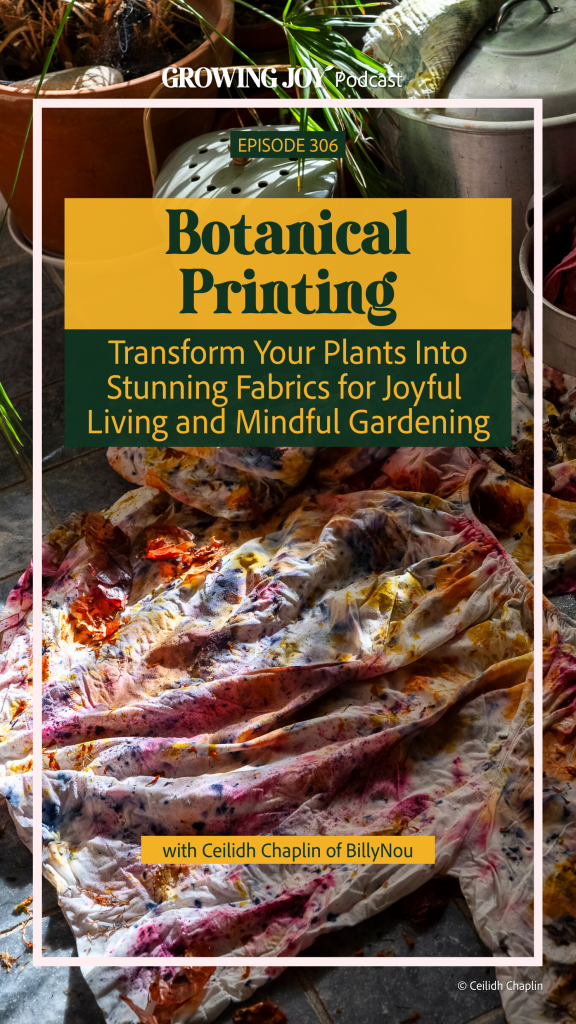
Have you ever seen a botanical dye outfit on someone and immediately just wanted to DIY one? A couple of weeks ago, someone slid into my DMs with a video that stopped me in my tracks. It was this pair of white overalls covered in the most gorgeous prints made entirely from actual flowers. As it turns out, the artist behind those viral overalls is Ceilidh Chaplin, the founder of the fashion brand BillyNou. She creates clothing using natural dyes that come straight from plants, flowers, and even scraps like avocado pits and onion skins. So I did what any self-respecting plant friend would do… I slid right into her DMs and asked her to come teach us how to make botanical prints ourselves. And she said yes!
In this episode, we’ll be walking you through what natural dyeing actually is, the beginner-friendly methods you can try, and why this might be your next planty obsession. Bring out your DIY kit!
In this episode, we learn:
- [03:12] Who is Ceilidh and how did she start BillyNou?
- [05:07] How a Steiner/Waldorf education shaped her creativity
- [06:23] How she lives a simple, joyful life in Provence
- [07:22] How she started using natural dyes in her clothing designs
- [09:06] What is a natural dye, and what are the different ways to use it?
- [12:48] Which fabrics give beginners the best results?
- [15:08] How to rinse and prep fibers correctly
- [15:30] Add a special, free element to your holiday gift with Wind River Chimes!
- [17:09] Start growing the stunning blooms mentioned in this episode with The Cut Flower Handbook by Lisa Ziegler
- [18:40] Can you dye denim?
- [21:04] Weddings, anniversaries, and sentimental dye projects
- [21:38] What makes bundle dyeing the ultimate beginner technique?
- [22:56] What are the best flowers to use as dyes?
- [24:11] How to dye a denim jacket
- [24:37] How to lay out flowers before rolling
- [26:43] How to steam your bundle safely at home
- [27:27] Why you must keep dye pots separate from food pots
- [28:28] How long to steam and when to unbundle
- [29:06] How modifiers like lemon juice or iron shift the colors
- [29:53] Why pH-neutral soap matters
- [30:18] What is Ceilidh’s coolest project? (ice-dyed lambswool scarves)
- [31:37] What are the biggest mistakes people make with bundle dyeing?
- [32:07] Which flowers don’t work well as dyes (and why)
- [33:04] Dyeing with medicinal herbs for symbolic meaning
- [33:38] Why green is the hardest color in natural dyeing
- [35:05] Best food scraps for dyeing: carrot tops, avocado pits, tea, coffee
- [36:10] Why citrus peels don’t dye well
- [36:25] Where to find BillyNou’s clothes, tutorials, and workshops
- [38:11] Inside her Creative Floral Retreat in Provence
Order my book!
Growing Joy: The Plant Lover's Guide to Cultivating Happiness (and Plants) by Maria Failla, Illustrated by Samantha Leung
Don't forget to subscribe to the podcast,
so you don't miss the amazing episodes we have coming up!
Natural Dyeing 101
If you’re completely new to natural dyeing, here’s the gist of what it is: using pigments from plants (and sometimes insects!) to color fabric.
There are a bunch of different methods, but these are the big ones:
- Immersion Dyeing
This is the classic “dye the whole piece of fabric one color” method. You put the fabric in a pot of natural pigment, heat it, and let the color soak in.
- Bundle Dyeing (The Viral Overalls)
This is the method from the viral video that I (and the rest of the internet) freaked out over. You sprinkle flowers on your fabric, roll it up tight, tie it, steam it, and when you unroll it… the flowers leave these gorgeous little prints.
- Ice Dyeing
You freeze pigment into ice cubes (or freeze actual flowers inside ice) and place them on the fabric. As the ice melts, the colors slowly spread.
- Flower Hammering
Yes… hammering actual flowers onto fabric. As in: you sandwich a flower between fabric and literally hammer it until the pigment transfers. It works great with cosmos and coreopsis. Ceilidh’s even done it on walls!
What Fabrics Should Beginners Use for Dyeing?
If you want the easiest and most satisfying first attempt, start with silk or wool. They’re natural protein fibers and take color beautifully even without fancy preparation.
Cotton, linen, and denim also work wonderfully, but they usually need a little help (either a fixative like aluminum salts or a soy milk soak to help the dye stick).
And yes, you can absolutely thrift denim overalls or a jacket and dye them.
Flowers and Food Scraps That Give Amazing Color
This is where it gets fun because you probably already have half of these at home. Here are some that give great color and clear prints:
- Marigolds
- Cosmos
- Coreopsis
- Purple pincushion flowers
- Red roses
- Dyer’s chamomile
For food scraps:
- Onion skins (bright oranges!)
- Avocado skins and pits
- Pomegranate skins
- Herbal teas
- Coffee grounds
- Carrot tops for soft greens
A Quick Step-by-Step of Bundle Dyeing
If you want to try the method from the famous overalls, here’s the simple breakdown:
- Start with damp, natural fabric (silk, cotton, linen, etc.).
- Scatter your flowers and plant materials across the cloth.
- Roll it up (like a tight burrito or a snail.)
- Tie it with a string.
- Steam it for about 20 minutes (using a thrift-store pot you keep separate from kitchen cookware).
- Let it cool a bit, then unwrap the bundle.
- Rinse gently, let it dry, and give it a good steam iron to set the color.
That’s literally it. The hardest part might be waiting for the bundle to cool before opening it.
Why Natural Dyeing Feels So Special
Ceilidh mentioned that natural dyes evolve. They soften or shift over time because they’re alive in a way synthetic dyes aren’t. And learning to appreciate that change feels like a deepening of our relationship with nature.
Green is also surprisingly hard to get, which is surprising because plants are green. Ceilidh said you should mix indigo (blue) with yellow dyes to get green.
White flowers don’t usually do much, unless you use a special powder to bring out texture. Wedding bouquet? Garden blooms? A flower from a trip? You can literally preserve that memory
My New Obsession!
If you’re a gardener, you already grow half the materials. If you’re a thrifter, you already love giving old clothes new life. And if you’re creative, you’re going to lose your mind in the best way.
As someone who grows flowers mostly because I love gifting bouquets, the idea that I can take my garden and wear it feels so personal and joyful.
And yes, I’m absolutely going to try denim overalls. And silk scarves. And probably more after that. 🙂
Mentioned in our conversation:
Thank you to our episode sponsors:
Wind River Chimes
Bring the gift of peace, serenity, and magic this holiday season with chimes! Wind River is a Virginia-based company creating premium handcrafted and hand-tuned wind chimes for over 35 years. If you are looking for an amazing gift that can help you or your loved ones grow joy and find a moment of peace, a Wind River chime is the perfect option. Plus, you can engrave the wind sail on the wind chime with meaningful dates, names, or phrases!
Visit windriverchimes.com and use code GROWINGJOY to receive free engraving on your chosen wind chimes.
Quarto: The Cut Flower Handbook by Lisa M Ziegler
If you want to dye fabric with flowers, why not grow the flowers yourself? Up your cut flower game with The Cut Flower Handbook by professional flower farmer Lisa M Ziegler. It is the bouquet-building bible gardeners have been waiting for! Included in The Cut Flower Handbook are 50 extensive flower profiles, planting tips, instructions, and images on how to pinch plants, how to make your cuts, how to dig a planting bed, and more. Plus, there are over 200 photos of the best cut flowers for home gardeners to grow and advice on caring for a cutting garden.
Pick up The Cut Flower Handbook at your favorite local bookstore, quarto.com, and wherever books are sold.
Follow Ceilidh:
Website
Shop
Instagram
YouTube
Facebook
Follow Maria and Growing Joy:
Order my book: Growing Joy: The Plant Lover's Guide to Cultivating Happiness (and Plants) by Maria Failla, Illustrated by Samantha Leung
Join the Bloom and Grow Garden Party Community Platform & App AKA the plantiest and kindest corner of the internet! Get your FREE 2-week trial here!
Take the Plant Parent Personality Quiz (Get the perfect plants, projects and educational resources for YOUR Lifestyle)
Support Bloom and Grow Radio by becoming a Plant Friend on Patreon!
Instagram: @growingjoywithmaria
Tiktok: @growingjoywithmaria
Subscribe to the Growing Joy Youtube channel! /growingjoywithmaria
Website: www.growingjoywithmaria.com
Pinterest: @growingjoywithmaria

Leave a Reply
You must be logged in to post a comment.