



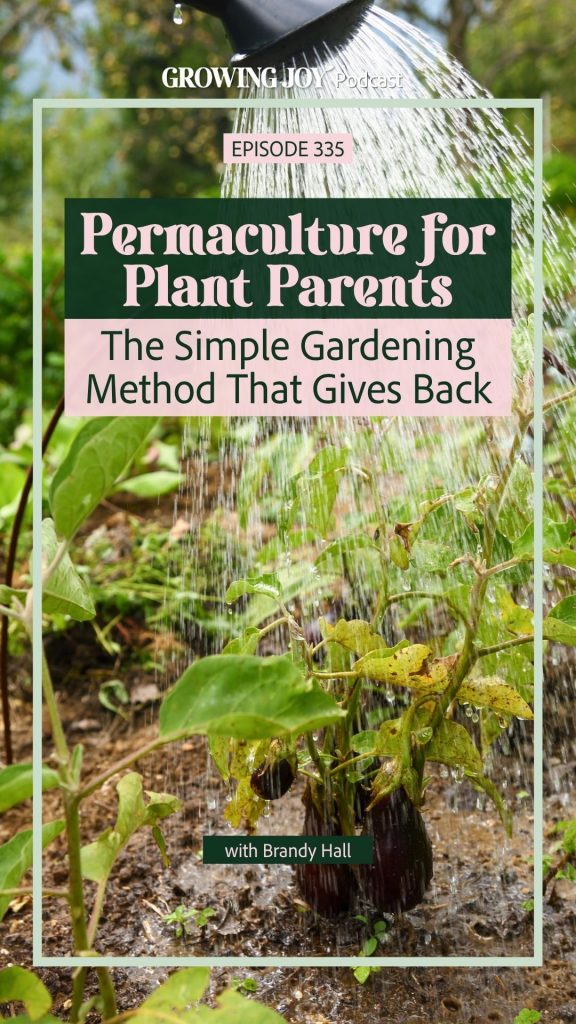
Permaculture for Plant Parents: The Simple Gardening Method That Gives Back with Brandy Hall, Ep 335
Don't forget to subscribe to the podcast,
My goal this year is to find more ease and joy in my garden! I love my plants, but I don’t want my yard to feel like another job. And when I realized that was a theme that was gonna keep coming up, I knew I needed to do an episode on permaculture. So I invited my plant friend, Brandy Hall. She’s a permaculture designer and has helped me see it as a simple, practical way to garden. She calls herself a garden editor for homeowners, which means she helps people like us turn regular lawns into regenerative spaces that get better over time.
In this episode, we learn:
- [02:45] Meet Brandy Hall of Shades of Green Permaculture!
- [03:23] How did she become the permaculture expert that she is today?
- [04:38] What pesticide exposure did to her family and why it changed everything
- [08:24] How travel, farm life, and construction work pulled Brandy into this career
- [10:51] Permaculture vs regenerative gardening vs rewilding vs ecological landscaping
- [12:50] Does permaculture have to mean growing your own food?
- [14:44] What are the three pillars of a regenerative landscape?
- [14:55] Pillar #1 Restore water cycle
- [15:11] Pillar #2 Soil fertility
- [15:46] Build long-term soil health with Espoma Organic!
- [17:22] Pillar #3 Building plant communities
- [18:00] Applying permaculture to real neighborhoods
- [21:19] How modern development broke the natural water cycle
- [23:42] What permaculture does differently with water
- [26:22] The biggest water management mistakes homeowners make
- [27:23] How to work with your downspouts and rain gardens to manage water
- [28:19] Why the soil is your best water storage system
- [30:19] How much water actually falls on your roof
- [31:55] What does a permaculture site consultation actually look like?
- [33:23] How to “read” your own space
- [34:47] How to choose plants for permaculture
- [36:02] Native vs non‑native plants
- [37:39] How to make a permaculture garden look aesthetic (even in an HOA)
- [40:00] How Brandy designs beautiful & productive beds
- [41:10] Where to start if you're new to permaculture
- [42:53] Brandy's online course, The Regenerative Backyard Blueprint
- [44:10] Where to find Brandy, her book, and her resources
Order my book!
Growing Joy: The Plant Lover's Guide to Cultivating Happiness (and Plants) by Maria Failla, Illustrated by Samantha Leung
What Is Permaculture Gardening?
I previously thought that permaculture meant growing all your own food on a big piece of land. Sure, that can be true, but that’s only one version of it. In simpler terms, it’s regenerative gardening: designing your yard so it works more like a healthy ecosystem.
In practice, that means “closing the loops”: you start building a garden that holds onto what it gets and uses it well.
That can mean:
- catching the rain that already falls on your roof
- using the leaves already on your lawn
- plant combinations that support each other, so you're not constantly taking in new stuff from outside
You might also hear words like regenerative gardening, regenerative landscaping, ecological landscaping, or rewilding. Different terms, but same idea: you take better care of your land, and it starts taking better care of you, your plants, and the pollinators that visit.
The Three Pillars of a Regenerative Garden
It doesn't matter if you have a hundred acres or a tiny yard. These pillars apply to everyone. And they're simple enough to follow!
- Restore the water cycle – slow rain down and let it soak into your soil before it hits the storm drain
- Build soil fertility – compost, mulch, manage your leaves instead of throwing them away, and cycle what you already have
- Grow plant communities – mix plants together so they support each other, the pollinators, the birds, and you
You don't have to do all three at once! You can pick one and see what happens. Just like what Brandy said, “There's no garden too small to make a big impact.”
And once you see your yard through these three lenses, you can't really unsee it.
Simple Rain Garden and Downspout Ideas
Rain hits the roof, rolls to the downspout, hits the storm drain, and then the creek. The soil never absorbs it. This is how we get flashfloods… and then drought.
Permaculture fixes this by slowing water down, and then letting your soil do the work.
A few simple ways to start:
- Redirect a downspout into a rain garden
- Link rain gardens down a slope (one fills up and spills into the next, like an ice cube tray)
- Check your rain barrel overflow pipe (it needs to be the same size as the pipe coming in)
Building Soil That Holds Water and Feeds Your Plants
Good soil holds water like a sponge, and it feeds your plants naturally. It cuts down how much you need to water and fertilize.
Here are some simple ways to start building your soil:
- Start a compost pile
- Leave your leaves
- Mulch your beds
- Try a no-dig bed
Note: I use Espoma Organic compost and their Bio-tone Starter Plus when I'm planting!
Plant Communities, Not Lonely Plants
This means every plant in your yard should be doing more than one job. Brandy says she's identified 13 functions a plant can play (you can learn more about it in her book!). She aims for every plant to fill at least three of those roles.
On the native vs. non-native debate, Brandy keeps it simple. If there's a great native option, use it. If there isn't, ask two questions:
- Is it aggressive? If yes, skip it unless you have a plan to manage it long-term
- Is there a native plant that could fill the same role? If yes, go with that instead
Try to really think about it. Tomatoes aren't native. Neither are most fruits and herbs we grow. So it's not as black and white as people make it.
Your Yard Can Be Part of Something Bigger
I bought a house in an HOA, and half the street has the same three shrubs. And for a while, I thought, “What can I really do here?”
Well, even one rain garden or a pollinator bed works. It all counts and connects. Your yard is already part of an ecosystem!
Mentioned in our conversation:
- The Complete Guide to Home Permaculture by Brandy Hall
- The Cut Flower Handbook: Select, Plant, Grow, and Harvest Gorgeous Blooms by Lisa Ziegler
Thank you to our episode sponsor:
Espoma Organic
A healthy garden begins with organic soil!! Espoma Organic is dedicated to making safe indoor and outdoor gardening products for people, pets, and the planet. They have an amazing variety of high-quality, organic potting mixes, garden soil, fertilizers, and pest control products that are organic and eco-friendly. To top it all off, they have a huge sustainability commitment with a 100% solar-powered plant, zero-waste manufacturing, and eco-friendly packaging.
Visit espoma.com to find your local Espoma dealer or check my Amazon storefront.
Follow Brandy:
Website
Instagram
Facebook
YouTube
Follow Maria and Growing Joy:
Order my book: Growing Joy: The Plant Lover's Guide to Cultivating Happiness (and Plants) by Maria Failla, Illustrated by Samantha Leung
Take the Plant Parent Personality Quiz (Get the perfect plants, projects and educational resources for YOUR Lifestyle)
Support Growing Joy with Maria by becoming a Plant Friend on Patreon!
Instagram: @growingjoywithmaria
Tiktok: @growingjoywithmaria
Subscribe to the Growing Joy YouTube channel! /growingjoywithmaria
Website: www.growingjoywithmaria.com
Pinterest: @growingjoywithmaria

Leave a Reply
You must be logged in to post a comment.