

Plantside Chats: Life Lessons Learned in the Garden, advanced plant care, Garden to Table, Gardening, General, General Plant Care Guides, plant care, plant science, plantfriendsIRL, Plants and Wellness, podcast
Exploring the Intersection of Black American History, Culture, and Botany Through Trees with Beronda Montgomery, Ep 323
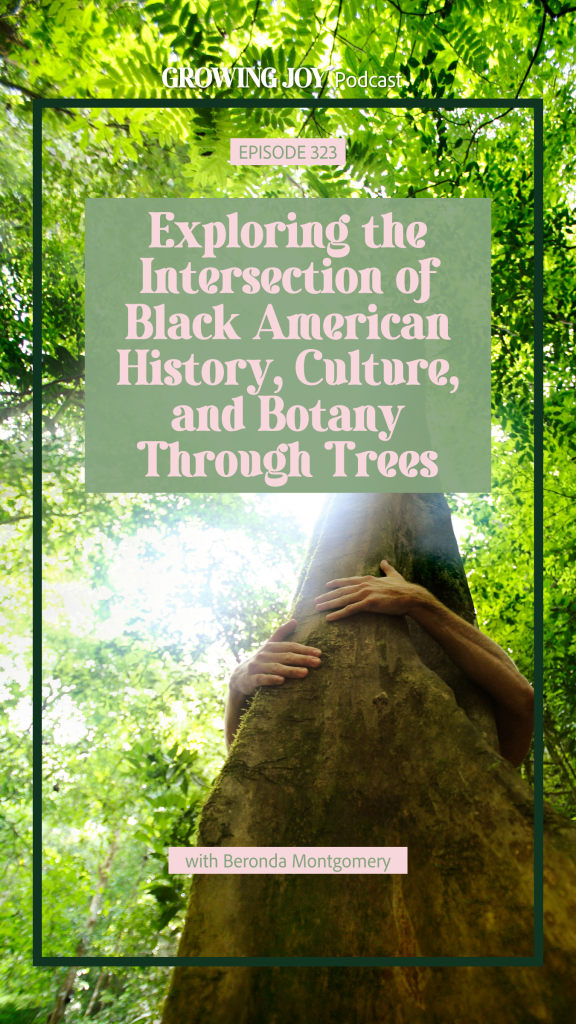
What if the trees around us aren’t just scenery but living witnesses to human history? As plant lovers and plant parents, we’re used to thinking about trees in terms of care: light, water, soil, pruning. But what if plants are actually memory keepers, witnesses to our collective past, and teachers of wisdom we desperately need today? In this episode, I'm SO excited to share my conversation with botanist, writer, author, and one of my favorite plant ladies, Beronda Montgomery! You might remember her from a previous podcast episode when we talked about her book, Lessons From Plants. She’s now back with a book called When Trees Testify. This episode lives right at the intersection of Black American history, culture, and botany. And honestly, it feels like a gentle but firm invitation for all plant parents to slow down, look closer, and practice a deeper kind of holistic plant care, one that includes history, healing, and humanity. Let's dive in!
In this episode, we learn:
- [02:01] Do you want to join my 2026 Growing Joy class experience?
- [02:53] Meet my plant friend Beronda Montgomery!
- [04:48] How plants “see” light and adapt their behavior to survive
- [05:23] Why Beronda’s work extends beyond botany into history and activism
- [06:15] Why weaving botany, history, and personal narrative creates a deeper impact
- [09:23] Why When Trees Testify matters and what sparked its creation
- [11:29] What is land trauma and its connection to agriculture and ancestry?
- [13:17] Learning to show up fully in spaces tied to ancestral trauma
- [14:27] What happened during their visit to the McLeod Plantation?
- [15:25] Pick up The Essential Guide to Ecological Gardening for practical gardening choices!
- [16:51] Upgrade your plant care with Espoma Organic’s high-quality premium products!
- [18:19] How a 600-year-old tree carries the breath and presence of generations before us
- [22:03] What is plant communication/tree communication?
- [23:02] What are “witness trees” and their part in the collective history?
- [25:06] How an enslaved botanist used grafting science to shape the pecan industry
- [27:32] Reclaiming a deep legacy of Black botanical knowledge
- [28:23] How reclaiming wisdom can help heal land trauma
- [30:22] Why plants became the perfect lens for asking bigger questions
- [32:18] Recognizing divine nudges and unexpected paths
- [32:29] Why is the Willow Tree chapter the most personal to write for Beronda?
- [33:46] Uncovering the Elaine, Arkansas massacre through plants
- [35:57] How trees help identify forgotten sacred spaces
- [36:17] Why trees matter globally as historical indicators
- [37:17] What does “Sankofa” mean?
- [39:03] Why Apple trees have such a great impact on history
- [41:55] How long it really took to write When Trees Testify
- [42:58] Life at Harvard’s Radcliffe Institute and what’s next for Beronda?
- [44:52] A minimalist plant collection and bonding over plants everywhere
- [45:14] Why plant talk is the fastest way to make friends
- [45:27] Where to find Beronda’s work, events, and future talks
Order my book!
Growing Joy: The Plant Lover's Guide to Cultivating Happiness (and Plants) by Maria Failla, Illustrated by Samantha Leung
Don't forget to subscribe to the podcast,
so you don't miss the amazing episodes we have coming up!
Trees as Witnesses to History
Beronda introduces the idea of trees as witnesses. They are living beings that have quite literally been present through centuries of human life.
Some of these trees were already old when enslaved people were forced to live and work beneath them. They absorbed the same air, the same breath, the same environment.
For many Black Americans, especially those whose ancestors were enslaved, trees and land can bring up a deep and complicated connection. It includes beauty, pain, resilience, and survival all at once.
Understanding Land Trauma
Land and agriculture don’t feel neutral for everyone. For many Black Americans, land is tied to forced labor, violence, and loss. This is called land trauma.
It means that history didn’t simply end with independence. It carried through Reconstruction, hardened during Jim Crow, and still shapes how people feel about land and plants today.
Recognizing that reality matters when we talk about healing in nature.
The Pecan Tree and Black Botanical Knowledge
Did you know that an enslaved person basically invented commercial pecan production?
His name was Antoine. He figured out how to graft pecan trees so they would produce consistent, high-quality pecans every time.
If you've ever tried propagation tips with your own plants, you know how hard grafting can be!
And yet, like so much Black expertise, Antoine’s contribution was largely erased from the story, even though his work shaped an entire industry.
Willow Chapter: A Personal Revelation
The chapter about willow trees is personal to Beronda. She discovered through research that her maternal grandfather was living in Elaine, Arkansas, in 1919 when an anti-Black massacre happened.
Willow trees were often planted as living headstones at unmarked burial sites, which was a practice that came from West Africa with enslaved people.
So when you see clusters of willow trees on former plantation land, it might indicate a burial ground, and trees are bearing witness.
What is Sankofa?
Beronda talks about this concept called Sankofa. It means going back to retrieve the parts of yourself. Bringing forward wisdom from the past.
This whole book is actually Sankofa. Bringing forward Antoine's story. Her grandfather's story. The stories of Black botanical expertise that have been buried.
But Beronda also thinks about it differently. She asks herself: How am I living NOW that will give future generations something good to bring forward? What kind of life am I creating that will be worth remembering?
That's reciprocity, nature's number one lesson.
The Role of Apple Trees in History
Of all the trees in the book, Beronda says people are most surprised by the apple chapter.
We expect to hear about oak trees from old plantations. Or poplar trees (the lynching tree). But apples?
Harriet Tubman LOVED apple trees. When she was enslaved, she had to help grow apple trees but wasn't allowed to eat the apples. So when she was finally free, growing and eating apples became this powerful symbol of freedom and joy.
Mentioned in our conversation:
- Book: When Trees Testify by Beronda Montgomery
- Book: Lessons from Plants by Beronda Montgomery
- Book: An Apple for Harriet Tubman by Glennette Tilley Turner & Susan Keeter
- Book: All That She Carried by Tuya Miles
- Book: How the Word Is Passed by Clint Smith
- Book: Braiding Sweetgrass by Robin Wall Kimmerer
- Article: Red Summer 1919: Tree memorializing black Americans killed in Elaine, Arkansas, cut down
Thank you to our episode sponsors:
Quarto: Essential Guide to Ecological Gardening by The American Horticultural Society
Deepen your understanding of your garden as a living system with the Essential Guide to Ecological Gardening! Learn how small, thoughtful gardening choices can result in a healthier and more resilient garden with this comprehensive book. It talks about building better soil, conserving your water, supporting pollinators, and making plant choices that actually fit your landscape and local wildlife, and many more. Make your gardening more gentle on the planet and more rewarding for you!
Grab the Essential Guide to Ecological Gardening at quarto.com and wherever books are sold.
Espoma Organic
As we gear up for the garden season, don't forget to give your garden only high-quality organic products! Espoma Organic is dedicated to making safe indoor and outdoor gardening products for people, pets, and the planet. They have an amazing variety of high-quality, organic potting mixes, garden soil, fertilizers, and pest control products that are organic and eco-friendly. To top it all off, they have a huge sustainability commitment with a 100% solar-powered plant, zero waste manufacturing, and eco-friendly packaging.
Visit espoma.com to find your local Espoma dealer or check my Amazon storefront.
Follow Beronda:
Follow Maria and Growing Joy:
Order my book: Growing Joy: The Plant Lover's Guide to Cultivating Happiness (and Plants) by Maria Failla, Illustrated by Samantha Leung
Join the Bloom and Grow Garden Party Community Platform & App AKA the plantiest and kindest corner of the internet! Get your FREE 2-week trial here!
Take the Plant Parent Personality Quiz (Get the perfect plants, projects and educational resources for YOUR Lifestyle)
Support Bloom and Grow Radio by becoming a Plant Friend on Patreon!
Instagram: @growingjoywithmaria
Tiktok: @growingjoywithmaria
Subscribe to the Growing Joy Youtube channel! /growingjoywithmaria
Website: www.growingjoywithmaria.com
Pinterest: @growingjoywithmaria

Leave a Reply
You must be logged in to post a comment.